Space
- Physics
Stephen Hawking says his group has solved a black hole puzzle
Physicist Stephen Hawking says light sliding along the outside of a black hole holds the key to understanding what’s inside.
- Physics
Fade to black? The universe is in decline
One of the largest sky surveys ever made has found that the universe is in decline. And after losing even more energy over the next 100 billion years, it will be dark, empty and boring.
- Planets
Scientists Say: Exoplanet
Eight planets orbit our sun. We give a slightly different name to the millions of similar bodies orbiting other stars.
- Planets
News Brief: Venus may have active volcanoes
The Venus Express spacecraft detected flashes of infrared light that may be from hot lava erupting from active volcanoes.
- Physics
Profile: Looking for life beyond the solar system
Planetary scientist and astrophysicist Sara Seager is a leader in the search for signs of life on planets beyond our solar system.
- Planets
Pluto hosts ice mountains, data suggest
Geologic activity appears to have been reshaping Pluto, erasing craters and more.
- Planets
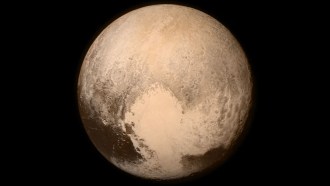
Picture This: Pluto hearts us
As a little spacecraft flies by Pluto, it is snapping up high resolution images and collecting unparalleled data.
- Space
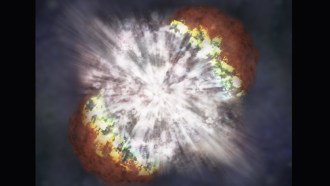
News Brief: Latest supernova is also super-brightest
The light from stellar fireworks in a galaxy far, far away has just reached Earth. It comes from a star that exploded in a massively bright flash.
- Planets
Scientists Say: Satellite
When we think of satellites, we often think of objects we send into space from Earth. But most satellites are actually all natural.
- Planets
Hello, Pluto!
Here's a collection of our stories about your favorite dwarf planet — including those on the New Horizons flyby.
- Planets
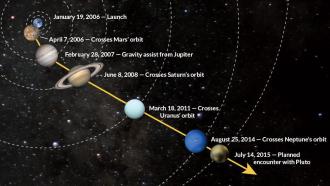
Visiting Pluto
Pluto has long been little more than a dark spot in the sky. Now NASA’s New Horizons spacecraft is about to fly by this dwarf planet. Along the way, it will collect unprecedented data on it.
- Space
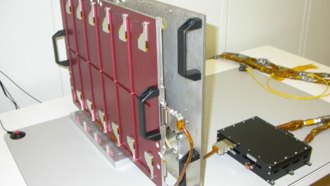
Students sent instrument to Pluto
The student-built dust counter on NASA’s New Horizons spacecraft is measuring how much grit and debris orbits out beyond Neptune.