Space
Plasma whirlpools on the sun could trigger solar flares
The largest solar telescope in the world captured swirling plasma structures on the sun’s surface. Take a look.
By Fechi Inyama
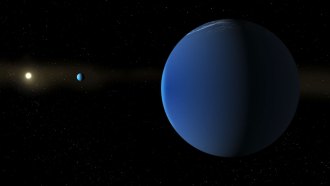
The puffiest planets known in our galaxy orbit a sunlike star more than 1,000 light-years from Earth.
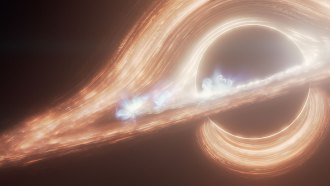
Past this boundary, nothing that enters a black hole can ever leave — not even light.
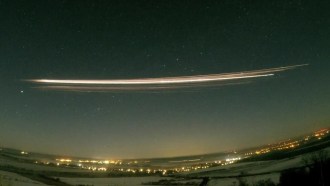
Detection of lithium from a SpaceX rocket reentering the atmosphere offers new evidence that space debris could harm the ozone layer.
On Earth, this line marks the edge of snow-covered ground. In space, it marks a spot where a certain molecule might freeze.
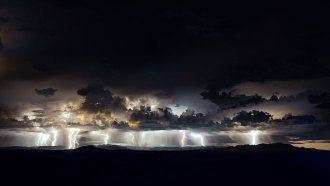
Thunderstorms help fix imbalances found in our atmosphere. For constant storms, those imbalances would have to persist.
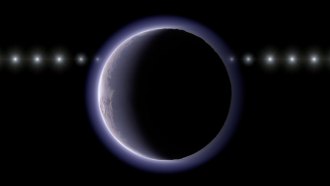
A brief stellar eclipse hints that this 2002 XV93 has a thin atmosphere. It would be a first for any solar-system body farther from the sun than Pluto.
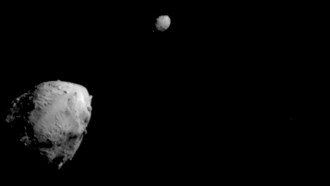
In 2022, NASA smashed a spacecraft into an asteroid. New data show how that impact changed the orbit around the sun of this space rock — and its partner.
After more than a century, scientists are just beginning to understand black holes — the most bizarre and powerful things in the universe.
Tiny black holes in the early universe could explain why matter is common and antimatter is not.