Tech
- Health & Medicine
Got brain rot?
Excessive scrolling through social media or viral videos can mess with your mental health — and possibly alter your brain’s development, studies show.
- Science & Society
Stressed by tech? Here’s how to find help
This checklist can help you assess and improve your experiences — and your mental health.
- Agriculture
This engineer designed a device to make farm work easier
Juan Espinoza engineered a device to help ease physical demands on workers at citrus farms.
- Earth
Build your own seismograph with this science activity
By recording earthquakes, seismographs help scientists better understand and hopefully predict quakes.
- Physics
Could a person ever wield lightning as a weapon?
From the shocking powers of electric eels to laser-guided lightning, aiming electricity is more real than it sounds.
- Tech
New light-activated coating can kill stubborn germs
Based on graphene, this new material can knock out hard-to-kill germs on contact — even in your mouth.
- Tech
Scientists Say: Cryogenic
This deep-frozen field of science allows conservation biologists to preserve the DNA of endangered species and more.
- Artificial Intelligence
Bots have their own social network, and it’s worrying experts
Security experts warn that Moltbook, which launched last month, is a "nightmare" where people may get their bots to steal others’ identities and money.
- Physics
Precise tee placement can improve golf driving, teen finds
A homemade golf-ball-driving machine helped this middle-school engineer improve his own game.
- Health & Medicine
Butt breathing might help people struggling to get enough oxygen
This strange investigation into whether humans can use the gut for breathing has surprisingly heartwarming origins: helping the scientist’s dad.
- Animals
Lions have a second roar that scientists have only just discovered
This insight from machine-learning analyses of recordings of calls in the wild might help detect where lions are declining.
- Tech
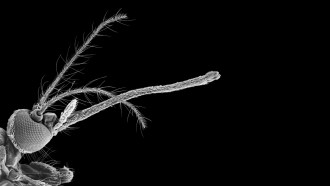
A mosquito’s mouth can ‘print’ lines thinner than a human hair
Scientists turned a mosquito’s straw-like mouthpart into a 3-D printing nozzle that creates ultra-thin lines.