All Stories
- Animals
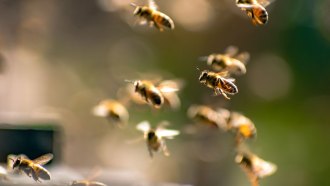
Analyze This: How many insects are in the air?
Weather data have helped estimate the density of flying insects in U.S. skies. That could help track climate change’s impact on insects.
- Artificial Intelligence
A new shield could guard AI agents against cyberattacks
A teen’s software could help guard AI that handles sensitive data against sneaky “prompt injection attacks.”
- Health & Medicine
Scientists get smart about farts with new underwear sensor
It snaps into regular undies to measure releases of hydrogen gas. Rates vary widely, but 32 farts a day seems about average, early data suggest.
- Space
Scientists Say: Observable universe
No light will ever reach Earth from beyond this distant horizon of space.
- Space
Do multiple universes exist?
Some branches of physics hint that our universe is just one of many in a vast “multiverse.”
- Plants
Light pollution could be supercharging your pollen allergies
Light pollution in North American cities seems to be tricking plants into releasing pollen for longer periods each year.
- Life
Looking for LUCA, everyone’s shared ancestor
You and all other living things descended from a single organism — our great-grand-germ. Scientists are studying modern genes to learn more about this very distant ancestor.
- Ecosystems
Hurricane Katrina shaped this coastal ecologist’s life and work
Surviving Hurricane Katrina inspired Elliott White Jr.’s scientific journey to studying how humans and climate change impact wetlands.
- Humans
Let’s learn about adrenaline
In short bursts, this hormone can help you face your fears. But in the long run, too much of it can be unhealthy.
- Planets
Massive underground lava tube found on Venus
A collapsed structure, which turned up in 30-year-old radar data from Venus, may be one of many underground caves.
- Life
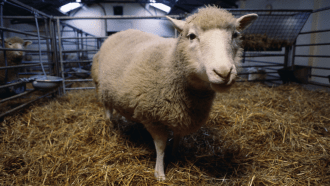
Scientists Say: Clone
This adaptable tech can help with everything from engineering medical microbes to preserving endangered species.
- Artificial Intelligence
Sneaky: AI auto-complete may be shaping our views
People are increasingly using AI auto-complete features when writing. Those tools may change how we think — even without our knowing.