All Stories
- Animals
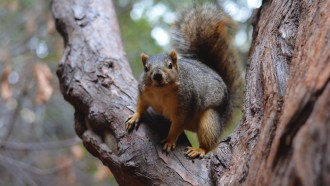
Squirrels use parkour tricks to leap from branch to branch
Squirrels navigate through trees by making rapid calculations. They have to balance trade-offs between branch flexibility and the distance between tree limbs.
- Chemistry
Scientists Say: Plasma
In physics, plasma refers to one of the four states of matter. In medicine, plasma describes the part of blood that ferries cells, nutrients and more throughout the body.
- Materials Science
Tiny swimming robots may help clean up a microplastics mess
Big problem, tiny solution. Researchers in the Czech Republic have designed swimming robots that can help collect and break down microplastics.
- Brain
Discovering the power of placebos
If you take a fake pill and expect to feel better, you may. Researchers are learning how this placebo effect works and how to use it to help patients.
- Archaeology
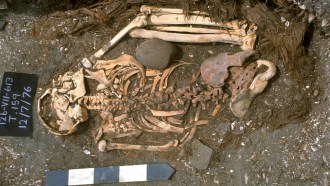
Skeletons point to world’s oldest known shark attacks
The newfound remains came from people who had lived thousands of years ago in Peru and Japan, half a world apart.
- Health & Medicine
Got back-to-school COVID-19 questions? We’ve got answers
If everybody masks up at school, that could prevent a bumpy 2021–22 schoolyear. It also could keep safe those students too young to be vaccinated.
- Health & Medicine
How COVID-19 testing plans can keep kids safe in school
As U.S. students head back to school, various testing strategies are being rolled out to help keep kids safe during in-person learning.
- Chemistry
Scientists Say: Aerosol
Aerosols are tiny bits of solids or drops of liquids suspended in gas. Aerosols include mist, fog and soot, as well as pollution from fossil fuels.
- Animals
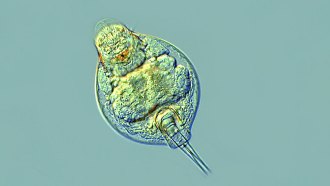
Tiny animals survive 24,000 years in suspended animation
Tiny bdelloid rotifers awake from a 24,000-year slumber when freed from the Arctic permafrost.
- Animals
Some pikas survive winter by eating yak poop
Pikas endure bone-chilling cold on the Tibetan Plateau by using little energy and fueling up on yak poop.
- Environment
Wildfire smoke seeds the air with potentially dangerous microbes
Studies now show that most wildfires don’t kill microbes. That’s fueling worries about what risks these smoke hitchhikers might pose to people.
- Materials Science
Take a look at this weird, bendy type of ice
These specially grown threads of ice bend into curves, then spring back when released.