All Stories
- Agriculture
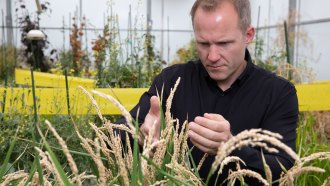
Crops are being engineered to thrive in our changing climate
Plants are already the best carbon catchers on Earth. New research could make them even better.
- Animals
Toothed whales use their noses to whistle and click
Much as people do, toothed whales, such as dolphins and sperm whales, make noises in three different vocal registers.
- Earth
Take candy core samples with this science activity
Act like a geologist as you drill ‘core samples’ from candy bars using a straw. Can you identify the type of candy bar just from a sample?
- Agriculture
Cow dung spews a climate-warming gas. Adding algae could limit that
But how useful this is depends on whether cows eat the red algae, a type of seaweed — or it gets added to their wastes after they’re pooped out.
-
We’re running an audio experiment
Science News Explores is running an experiment. We’re providing audio recordings of stories, made with Amazon Polly, along with the written story. Read, listen or both!
- Tech
Scientists Say: Robot
These task-doers handle jobs as simple as vacuuming the floor and as complex as navigating extraterrestrial terrains.
- Tech
A puff of air could deliver vaccines needle-free
A new Nerf gun-like device may make injections safer, faster and easier.
- Tech
AI can now turn blurry thermal vision into crisp images
Even when it’s pitch black, the new imaging system can create clear images while also accurately gauging distances to objects.
- Fossils
New fossils bring the wide world of pterosaurs to life
The latest clues from fossils hint at where these flying reptiles came from, how they evolved, what they ate and more.
- Tech
Magic, cooking and droids inspire this roboticist
Dennis Hong and his team design human-like robots that can help solve problems and also entertain.
- Animals
Let’s learn about beetles’ survival superpowers
Some beetle species can survive extreme pressure, dehydration or even getting eaten.
- Physics
Scientists Say: X-ray
X-rays are a type of light that doctors use to image the inside of the body. Astronomers use X-rays to explore the cosmos.