All Stories
- Physics
Efforts to create ultrafast light pulses win 2023 physics Nobel
Pierre Agostini, Ferenc Krausz and Anne L’Huillier won the prize for creating light bursts that last billionths of a billionth of a second.
- Space
Four researchers on Earth are spending a year on ‘Mars’
A crew of four entered Mars Dune Alpha in Houston, Texas. They will remain isolated inside for a year, living and working as if on the Red Planet.
- Health & Medicine
RNA work that led to COVID-19 vaccines wins 2023 Nobel in medicine
Katalin Karikó and Drew Weissman overcame hurdles to using mRNA for medicine. This led to COVID vaccines — and maybe, one day, some for other infections.
- Brain
Neuroscientists decoded a song from brain activity
The technique could help improve communication devices for people who are unable to speak.
- Math
Scientists Say: Imaginary Number
These numbers may not be “real,” but they sure aren’t make-believe.
- Animals
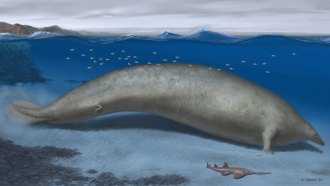
This massive ancient whale may be the heaviest animal ever known
Called Perucetus colossus, it may have tipped the scales at up to 340 metric tons — more than today’s blue whales.
- Psychology
Spending time in green spaces can provide big health benefits
Walking through a park or playing in a yard can make you feel better, both mentally and physically. Here’s how — and evidence it works for people at any age.
- Animals
This egg-eater may have the biggest gulp of any snake its size
Slither aside, Burmese pythons. This little African snake has a truly outsized swallow.
- Archaeology
Let’s learn about Stonehenge
Questions remain about exactly who built Stonehenge and why. But some details are known about the site’s origins.
- Brain
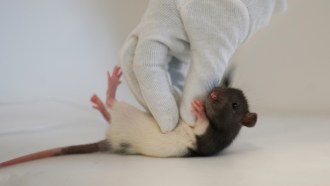
A rat’s playfulness relies on cells in one part of its brain
Certain cells here control its behavior. Studying this circuitry could also help us understand depression in people.
- Chemistry
Scientists Say: Rare earth element
Rare earth elements aren’t all that rare — but skyrocketing demand for these metals makes them precious.
- Animals
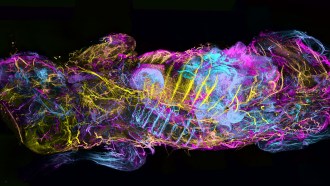
A new technique creates glowing whole-body maps of mice
Removing cholesterol from mouse bodies lets fluorescent proteins seep into every tissue. That has helped researchers map entire body parts.