Scientists Say
A weekly word defined, in a sentence and in context. Click here to find the alphabetized list.
- Space
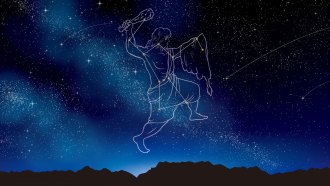
Scientists Say: Constellation
Constellations are clusters of related things, especially the stars that form patterns in the night sky — some of which date back to ancient times.
- Animals
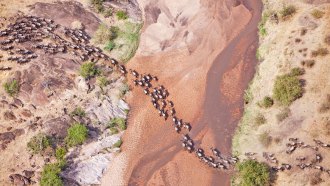
Scientists Say: Migration
Migration involves the movement of animals or people from one place to another.
- Chemistry
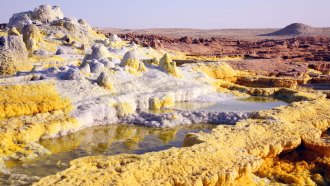
Scientists Say: Inorganic
Inorganic molecules include salts, minerals and other compounds that lack organics’ carbon-hydrogen bonds.
- Physics
Scientists Say: Doppler effect
The Doppler effect is a perceived change in the frequency of light or sound waves due to the wave source moving relative to an observer.
- Math
Scientists Say: Equation
An equation states that two groups of numbers or variables are equal to each other.
- Tech
Scientists Say: Machine learning
Machine learning allows computers to learn new skills without programmers having to write out step-by-step instructions.
- Chemistry
Scientists Say: Cellulose
Cellulose is an abundant natural polymer found in plants and algae. It’s used to make everything from paper to clothing.
- Earth
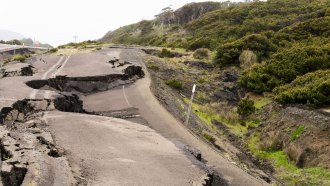
Scientists Say: Richter Scale
The Richter scale and other magnitude measures reveal the strength of an earthquake.
- Physics
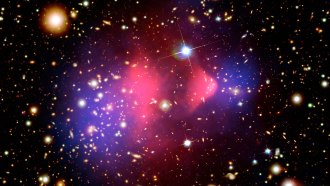
Scientists Say: Dark Energy
Dark energy is the unknown force causing the universe to expand faster and faster.
- Life
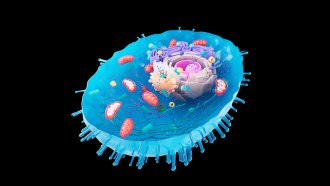
Scientists Say: Eukaryote
Eukaryotes are living things whose cells package their genetic material inside a pouch called a nucleus.
- Earth
Scientists Say: Pollution
Pollution is any substance or form of energy released into the environment that is harmful to people or other living creatures.
- Math
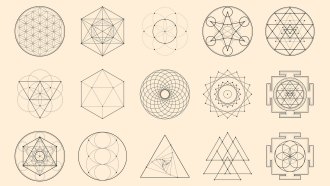
Scientists Say: Geometry
Geometry is math that allows people to measure, analyze and compare figures in space.