Scientists Say
A weekly word defined, in a sentence and in context. Click here to find the alphabetized list.
- Earth
Scientists Say: Pole
A pole is either of two opposite ends of a molecule, magnet, battery, planet or other object.
- Life
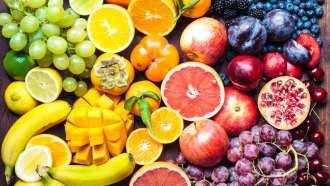
Scientists Say: Fruit
Some foods usually called vegetables — such as tomatoes, cucumbers and peppers — are actually fruits.
- Health & Medicine
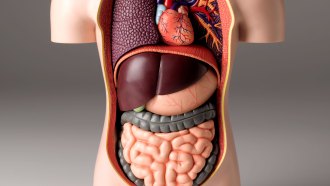
Scientists Say: Liver
This organ in the upper-right side of the belly does many essential jobs, such as cleaning blood and producing bile.
-
- Space
Scientists Say: Telescope
Almost everything we know about the universe around us, we know thanks to telescopes.
- Life
Scientists Say: Fungi
Although some fungi can cause diseases, others can be eaten, used to make medicines or serve other useful functions.
- Physics
Scientists Say: Force
When an object experiences a force, its change in motion — or acceleration — depends on its mass.
- Physics
Scientists Say: LED
LEDs, or light-emitting diodes, light up TV screens, traffic lights and many other devices used in daily life.
- Brain
Scientists Say: Cognition
Cognition is involved in all conscious mental activity, from thinking and reasoning to remembering.
- Earth
Scientists Say: Humidity
Feel sticky when you step outside on a summer day? Blame humidity — water in the air.
- Life
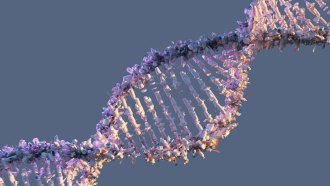
Scientists Say: DNA
Short for deoxyribonucleic acid, DNA is the molecule that determines how each living thing looks and works.
- Psychology
Scientists Say: Trauma
No one experiences trauma the same way. Its effects can be physical or emotional. Immediate or delayed. Brief or long-lasting.