Scientists Say
A weekly word defined, in a sentence and in context. Click here to find the alphabetized list.
- Life
Scientists Say: Autophagy
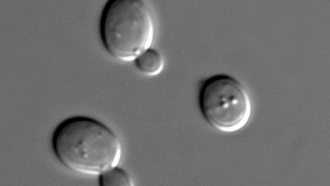
Cells can break down and recycle their parts for later use. This process — called autophagy — won a scientist a Nobel Prize in 2016.
- Plants
Scientists Say: Bromeliad
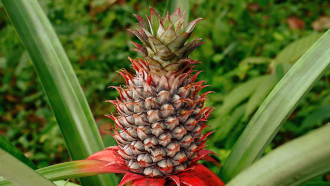
Bromeliads are plants with long spiky leaves. They are common houseplants, and we even see one in the grocery store — the pineapple.
- Plants
Scientists Say: Chlorophyll
Plants can make energy out of sunlight, all thanks to a pigment called chlorophyll.
- Science & Society
Scientists Say: Stereotype
This is a belief or explanation for something. But when beliefs get overly simplified, they may no longer be true.
- Earth
Scientists Say: Permafrost
In polar regions, it gets cold enough that the very dirt will freeze, and stay frozen. This soil has a special name.
- Ecosystems
Scientists Say: Tundra
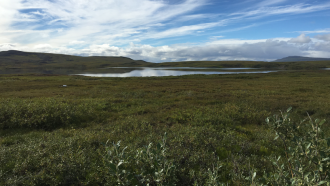
A tundra is an ecosystem found in Earth’s far north. It has a layer of soil deep underground that remains frozen — sometimes for thousands of years. But the top layer thaws in the summer, allowing plants to grow.
- Environment
Scientists Say: Aufeis
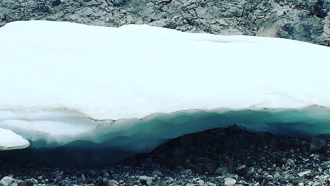
Water keeps flowing underground even in the coldest Arctic winters. But when it comes to the surface, it chills out and forms large layers of ice — called aufeis.
- Climate
Scientists Say: Albedo
To measure how much light reflects off an object, scientists measure its albedo.
- Earth
Scientists Say: Hoodoo
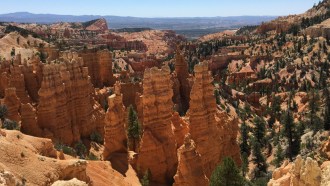
When softer rocks are covered with a harder rock layer, weathering can wear away the softer stone. This will leave behind tall thin towers — hoodoos.
- Genetics
Scientists Say: DNA sequencing
All of us have our own individual DNA. Now, scientists can determine what each individual strand is made of — a process called DNA sequencing.
- Animals
Scientists Say: Crepuscular
Day creatures are diurnal. Night creatures are nocturnal. Animals active at twilight get a special name.
- Animals
Scientists Say: Venomous
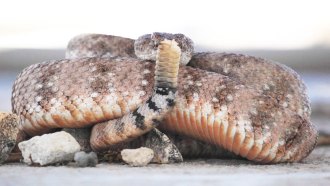
A poison-arrow frog is poisonous, but a rattlesnake is not. What’s the difference? It’s how their poisons are delivered.