Scientists Say
A weekly word defined, in a sentence and in context. Click here to find the alphabetized list.
- Health & Medicine
Scientists Say: Poisonous
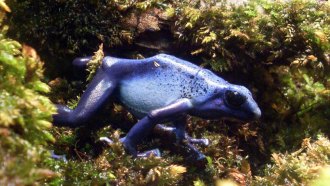
A poison-arrow frog is poisonous, but a rattlesnake is not. What’s the difference? It’s how the poison is delivered.
- Earth
Scientists Say: Plastisphere
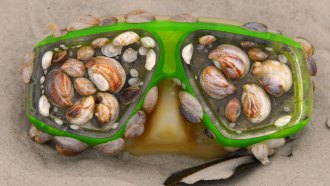
As plastic floats in the ocean, it can acquire its own colony of microbes and algae. We call this ecosystem the plastisphere.
- Chemistry
Scientists Say: Toxin
It is safe to refer to any poison as toxic. But while all toxins are poisonous, most poisons are not toxins.
- Chemistry
Scientists Say: Cyanide
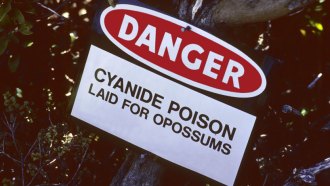
Cyanides are poisonous. But they are more than that. This group of compounds is used in everything from mining to capturing fish.
- Space
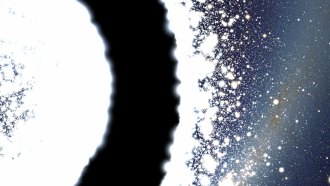
Scientists Say: Wormhole
Scientists have predicted the presence of tunnels in space that connect two points in space and time. They are named for the shape they resemble.
- Life
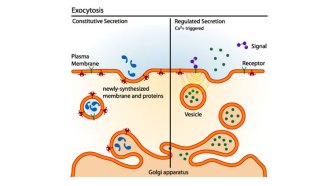
Scientists Say: Exocytosis
For a cell to remove something large from inside itself, it turns to a process called exocytosis.
- Chemistry
Scientists Say: Acidification
When a solution becomes more acidic, it’s acidifying. And that’s not always a good thing.
- Life
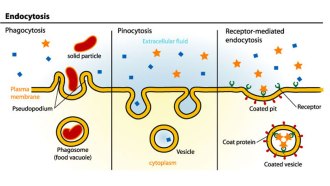
Scientists Say: Endocytosis
Small molecules can go into a cell through receptors or even just dissolve into it. But something big? That requires endocytosis.
- Physics
Scientists Say: Absolute zero
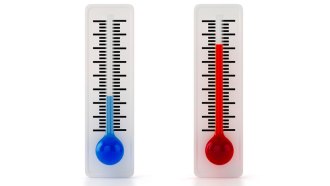
Even when we think it’s cold out, most molecules are moving. Only at absolute zero will all of their motions stop.
- Animals
Scientists Say: Copepod
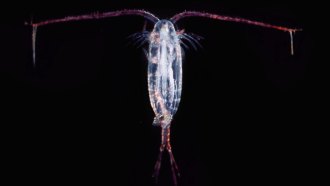
Copepods are tiny crustaceans. They eat phytoplankton and float in the water column, although some live in freshwater and on the sea floor.
- Life
Scientists Say: Strain
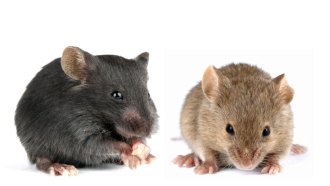
These are organisms that belong to the same species, but have definable differences.
- Life
Scientists Say: Vector
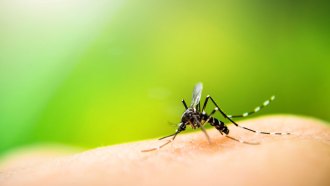
Vectors are used to transfer things. Sometimes the transferred item is a disease, but scientists can also use vectors to insert helpful genes.