Scientists Say
A weekly word defined, in a sentence and in context. Click here to find the alphabetized list.
- Physics
Scientists Say: Frequency
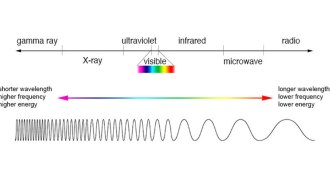
The distance between one wave peak and another is wavelength. But how fast those peaks are moving along is frequency.
- Physics
Scientists Say: Yottawatt
On Earth, scientists measure energy use in watts. When you have lot of those watts — one million billion billion — you have a yottawatt.
- Physics
Scientists Say: Wavelength
When something travels as a wave — such as light — scientists can measure it by its wavelength, the distances between the peaks.
- Physics
Scientists Say: Watt
Say Watt? This is a unit used to measure the flow of energy being used.
- Math
Scientists Say: Y-axis
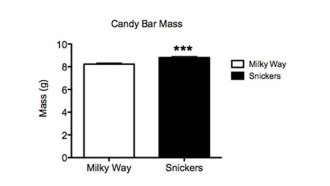
The bars on a graph tell you nothing unless you know what they mean. The lines on the sides can let you know.
- Life
Scientists Say: Yeast
For some people, yeast bring to mind slimy infections. But these little fungal beasts are used to make bread rise, too.
- Math
Scientists Say: X-axis
The bars on a graph tell you nothing unless you know what they mean. The lines on the sides can let you know.
-
-
Scientists Say: Replication
A scientist can run an experiment and get a result. But that result won’t be truly trustworthy until other scientists rerun the tests and replicate the findings.
- Physics
Scientists Say: Potential energy
This is the energy an object has because of its position or condition.
- Health & Medicine
Scientists Say: Zika
Zika virus has burst into the news because it is linked with microcephaly — a condition where babies are born with small heads.
- Chemistry
Scientists Say: Precipitation
Chemicals can dissolve into a solution, but when they come out, they precipitate.