Uncategorized
- Agriculture
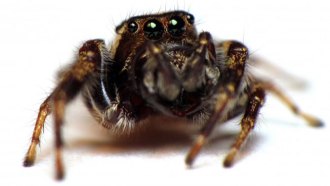
Insecticide can change a spider’s personality
A chemical meant to kill moths affects the behavior of some spiders. It alters the spiders’ ability to capture prey — including those moths.
- Animals
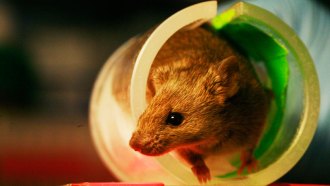
Some pollutants made mice less friendly
Hormone-interfering chemicals make mice less social and may also alter their weight, a study finds. That affected the animals’ confidence — and behavior.
- Physics
Scientists Say: Quantum
Quantum seems like a very complex word. But really, it’s a term used for something very, very small.
- Science & Society
Retractions: Righting the wrongs of science
Retractions let scientific journals remove bogus studies from the record. It's part of a self-correction process that helps move science forward.
- Science & Society
When a study can’t be replicated
Many factors can prevent one study from matching another in all regards, including its findings. Those factors may have nothing to do with mischief.
- Health & Medicine
Survey finds U.S. schools start ‘too early’
The school bell dings too early for U.S. tweens and teens, a survey finds. Most kids start class well before the recommended 8:30 a.m.
- Planets
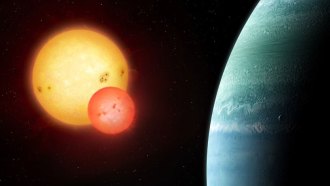
Like Tatooine in ‘Star Wars,’ this planet has two suns
Scientists have found the tenth planet with two suns. Such planets might be more common than single-sun planets, like our own, a new survey suggests.
- Health & Medicine
More data link vaping to smoking
A new study finds vapers who don’t smoke are likely to start — even when they initially had no intention of ever taking up a cigarette.
- Physics
Scientists Say: Viscosity
We know some liquids are thick and some are thin. This week’s word describes the property of these liquids to resist tension or pressure.
- Animals
Chikungunya wings its way north — on mosquitoes
A mosquito-borne virus once found only in the tropics has adapted to survive in mosquitoes in cooler places, such as Europe and North America.
- Physics
Stephen Hawking says his group has solved a black hole puzzle
Physicist Stephen Hawking says light sliding along the outside of a black hole holds the key to understanding what’s inside.
- Animals
Boa constrictors stop their victims’ hearts
It’s a myth that boa constrictors kill by suffocation. A new study shows the snakes actually squeeze off blood flow, stopping the hearts of their prey.