Uncategorized
- Humans
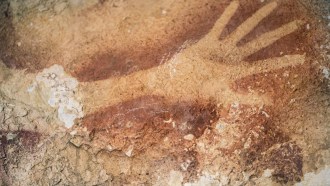
Stone Age stencils: Really old art
Scientists thought that cave art started in Europe. New analyses now dash that assessment. Stencils in an Indonesian cave are every bit as old as the better-known drawings in caves in France and Spain.
- Physics
How science saved the Eiffel Tower
The Eiffel Tower was an engineering masterpiece. But Parisians initially thought it too ugly to let stand for more than 20 years. So Eiffel made the tower a bastion of science. And that would soon ensure that the structure was too valuable to tear down.
- Tech
Fun facts about the Eiffel Tower
Here are some details of what it took to design, build — and what it now takes to maintain — this icon of the Paris skyline.
- Health & Medicine
Pills of frozen poop fight killer disease
Popping poop pills? Of course it sounds yucky. But researchers find it might just be one of the most effective ways to knock out a very serious — and tough-to-kill — intestinal disease.
- Health & Medicine
Explainer: What is C. difficile?
Over the past two decades, these severe bacterial infections have evolved from a no-big-deal occurrence to a common, life-threatening problem.
- Animals
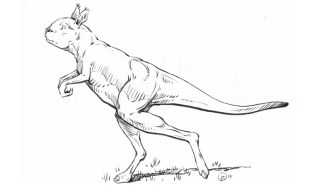
News Brief: No hopping for these ancient ‘roos
By hopping, today’s kangaroos can scoot swiftly through the countryside. That was not true for some of their ancient cousins. True giants, those now-extinct kangaroos would have walked on two feet — and relied on their tippy-toes.
- Chemistry
Sunlight might have put oxygen in Earth’s early air
High-energy bursts of ultraviolet light can break apart carbon dioxide, yielding oxygen gas. The experiment may mimic what happened on Earth billions of years ago.
- Earth
How people have been shaping the Earth
We are the dominant force of change on Earth. Some experts propose naming our current time period the ‘Anthropocene’ to reflect our impact.
- Animals
Coming: The sixth mass extinction?
Species are dying off at such a rapid rate — faster than at any other time in human existence — that many resources on which we depend may disappear.
- Climate
Explainer: Understanding ice ages
Earth slowly wobbles, tilts and stretches (or contracts) as it orbits the sun. These changes may be fairly small and subtle. Still, their cumulative impacts can be huge — sometimes triggering the slow onset of an ice age or an abrupt thaw.
- Brain
Strong body helps the mind
Study finds new link between the body and brain in mice and may help explain how exercise heals.
- Brain
Exercise builds brawn — and brains
One 20-minute session of leg exercises improved memory recall by about 10 percent.