Uncategorized
- Health & Medicine
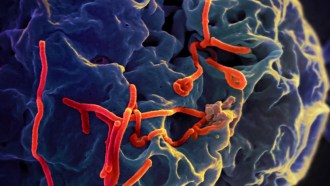
News Brief: First cases of Ebola acquired outside Africa
Health workers who had worn extensive protective gear still became infected with Ebola while treating patients in Spain and the United States.
- Chemistry
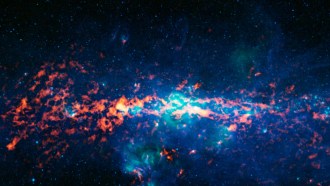
Space cloud may hold clue to life’s origins
Scientists probing a cloud of dust and gas some 26,000 light-years away found a chemical with a structure resembling molecules critical for all life on Earth.
- Brain
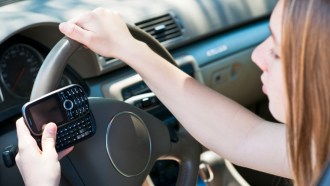
The distracted teenage brain
Teens often show poor judgment in decision-making. Scientists have long blamed this on the fact that their brains are still developing. A new study offers another explanation: distractions form rewarding behaviors — ones that persist even after the reward itself has disappeared.
- Science & Society
Teen wins Nobel for support of educating girls
Malala Yousafzai survived an attempt on her life by extremists who protested her efforts to see that girls be allowed to go to school. Upon recovery, she expanded her outreach to beyond her Pakistani homeland. She has just become the youngest-ever Nobel Prize winner.
- Computing
Models: How computers make predictions
They use numbers to model real-world activities. And new insights in math are streamlining models’ design.
- Physics
Nobel goes for creating the ‘nanoscope’
A regular microscope can’t bring into focus the nanoscale molecules from which cells are built. Using lasers and fluorescent molecules, three scientists found a way to view these tiny features. Their reward: the 2014 Nobel Prize in chemistry.
- Planets
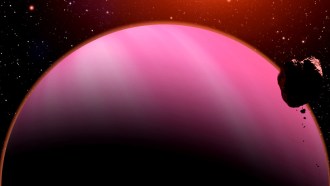
Distant world hosts water
One measure of an extraterrestrial world’s potential for supporting life is the presence of water. The Neptune-size HAT-P-11b fits that criterion.
- Materials Science
Nobel goes for making white LEDs possible
The 2014 Nobel Prize in Physics has been awarded to scientists who discovered how to make blue light-emitting diodes. People really wanted white LEDs. The missing ingredient in making them was a building block: the blue LED.
- Health & Medicine
Artificial sweeteners may evict good gut microbes
People use saccharin and other artificial sweeteners to try to stay healthy. A study now suggests such sweeteners might actually cause harm by encouraging the wrong bacteria to grow in our guts.
- Brain
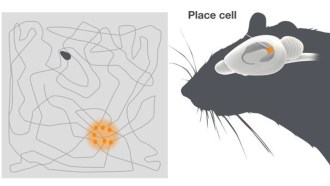
Nobel goes for finding brain’s ‘GPS’
The 2014 Nobel Prize in Physiology or Medicine has been awarded to scientists who discovered how the brain maps our place within our environment.
- Tech
Squishy robot propelled by ka-pow!
This is not your average robot. It flies through the air, propelled by an explosion in one of its arms. It could prove useful in disaster areas or war zones.
- Animals
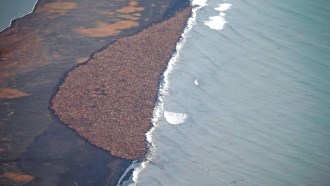
Picture this: Too many walruses
A giant herd of walruses have hauled out onto a beach in Alaska. They don’t belong there, but with no ice nearby, they have taken to land.