Uncategorized
- Science & Society
E-cigarette makers focus on teens
A high-level group of senators and members of the U.S. House of Representatives surveyed makers of e-cigarettes and finds they are targeting youth. They conclude that new federal laws should be created to end practices that could turn teens into nicotine addicts.
- Physics
World’s coolest ‘clock’ is also crazy-accurate
This is the time to beat — the world’s most accurate atomic clock ever. At its heart is a ‘fountain’ of cesium atoms chilled nearly to absolute zero!
- Physics
Explainer: How lasers make ‘optical molasses’
Light can bump an atom. Bump it from several different directions at once and even a fast-moving atom will instantly freeze its motion — and chill it to a temperature of nearly absolute zero.
- Microbes
A success for designer life
Synthetic biologists are scientists who create custom organisms in the lab. Their efforts have just taken a big step forward. They have created the first lab-made yeast chromosome. The advance could lead to entirely synthetic organisms customized to produce food, fuel or medicine.
- Physics
Filter lets in only the right light
Scientists have built a light filter that only permits light coming from one desired angle to pass through. Built from alternating layers of transparent materials, it could help minimize the glare in telescopes and cameras or boost the efficiency of solar cells.
- Animals
Sea otters picked up swine flu
A new study finds that large numbers of sea otters off of the U.S. Pacific coast have been exposed to the ‘pandemic’ type of this killer virus.
- Space
A ‘wedding ring’ in space
An unusually circular gas remnant of a dead star appears behind a star that’s still burning bright. When viewed from Earth, the pair resembles a sparkling diamond ring.
- Animals
When a species can’t stand the heat
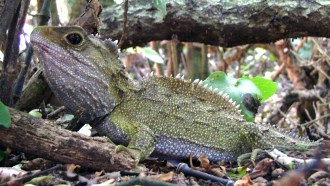
When temperatures rise, New Zealand’s tuatara produce more males. With global warming, that could leave the ancient reptile species with too few females to avoid going extinct.
- Animals
Explainer: How invasive species ratted out the tuatara
The introduction of rats to New Zealand led to huge population losses of the ancient tuatara. These uncommon reptiles vanished from the mainland. This left isolated populations to survive on several dozen isolated islands.
- Environment
Poisonings linked to e-cigarettes
A federal survey finds electronic cigarettes and the chemicals they burn are an increasing cause of reports of harm made to poison-control centers. Young children are often the victims.
- Health & Medicine
The nose knows a trillion scents
There's a long-standing claim that people can identify 10,000 different odors. But a new study suggests that people can actually identify at least 10,000 times that many scents.
- Brain
Understanding Autism
Genetics appears to play some role in this disorder, which affects more than one percent of all Americans.