Let’s learn about life forms that have survived in space
Moss spores, mustard seeds, bacteria and tardigrades have all withstood the vacuum of outer space
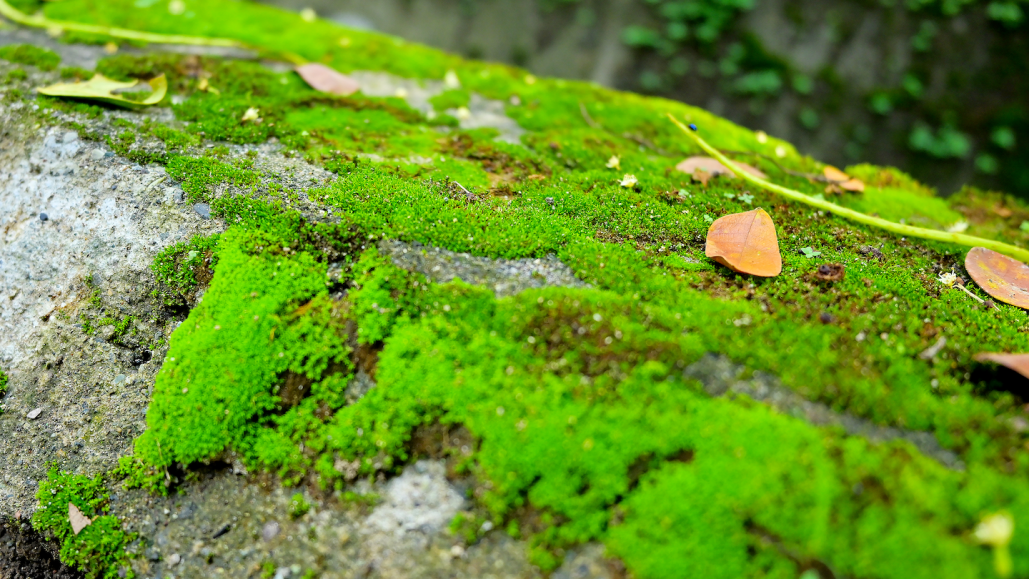
The moss species Physcomitrium patens (shown) is the latest life form to survive a stay in space.
Mathlaul Anwar/iStock/Getty Images Plus
Share this:
- Share via email (Opens in new window) Email
- Share on Facebook (Opens in new window) Facebook
- Share on X (Opens in new window) X
- Share on Pinterest (Opens in new window) Pinterest
- Share on Reddit (Opens in new window) Reddit
- Share to Google Classroom (Opens in new window) Google Classroom
- Print (Opens in new window) Print
Plenty of species have gone to space. Monkeys and dogs were among the first astronauts and cosmonauts. Those animals were sent on missions to see how space travel might affect people. (Spoiler: They didn’t always survive.) Then humans took to space. And they have since ferried everything from frogs and butterflies to lettuce and flowers to the International Space Station, or ISS. There, astronauts run experiments to test how life fares beyond our home planet.
But most organisms have spent their out-of-this-world journeys onboard spacecraft. Inside those vehicles, living things have air to breathe. They’re shielded against the extreme temperature swings of outer space. And they’re somewhat sheltered from the radiation that fills the cosmos.
Few life forms have ever been sent into the void of outer space and lived for scientists to tell their tales. Among that elite club of survivors are moss spores, bacteria, plant seeds and tardigrades.
Moss only earned its survived-in-space badge a few months ago. Spores of the species Physcomitrium patens lived nine months outside the ISS. Hunkering down in a dormant state helped the spores withstand being dried out and exposed to extreme temps. The spores were also enclosed in a natural casing called sporangium, which guarded them against space radiation.
Scientists have likewise placed clumps of Deinococcus bacteria outside the space station. These microbes, which live in Earth’s stratosphere, are known for standing up well to radiation. Some of them lived through a three-year stint in outer space.
In another experiment, researchers left seeds from mustard and tobacco plants in space for more than a year and a half. Some of those seeds survived and sprouted plants. Tardigrades and lichens — both famous for withstanding harsh conditions on Earth — have done tours in space as well.
These experiments are useful for a few reasons. They help scientists figure out which plants could be taken to the moon or Mars. Such hardy plants could supply astronauts with food and oxygen. Testing life’s limits also reveals the risk of astronauts contaminating other planets with Earth microbes. And it offers clues about whether organisms could drift on space rocks from one planet to another. If so, life might be able to start in one place and spread across the universe — a concept known as panspermia.
Want to know more? We’ve got some stories to get you started:
If bacteria stick together, they can survive for years in space Tiny clumps of bacteria can survive at least three years in outer space. This raises the prospect of interplanetary travel by microbial life. (9/18/2020) Readability: 7.8
These ultra-long experiments outlive their scientists — on purpose Space isn’t the only place scientists have tested the extreme hardiness of seeds. (11/6/2025) Readability: 6.5
Let’s learn about tardigrades Surviving the vacuum of outer space is far from tardigrades’ only superpower. (9/23/2025) Readability: 7.2
Explore more
Explainer: How a seed grows into a plant
Let’s learn about the International Space Station
Most Americans would welcome a microbial E.T.
Moss spores survived in space for 9 months (from Science News)
How to keep humans from ruining the search for life on Mars (from Science News)
A barrage of radiation couldn’t kill this hardy life-form (from Science News)
Tardigrades could teach us how to handle the rigors of space travel (from Science News)
Activities
Explore how life survives in extreme environments on Earth — and what it might look like on other worlds — with the Extremoverse Card Game from the Arizona Astrobiology Center.