
All Stories by Bethany Brookshire
- Brain
Scientists Say: Opioid
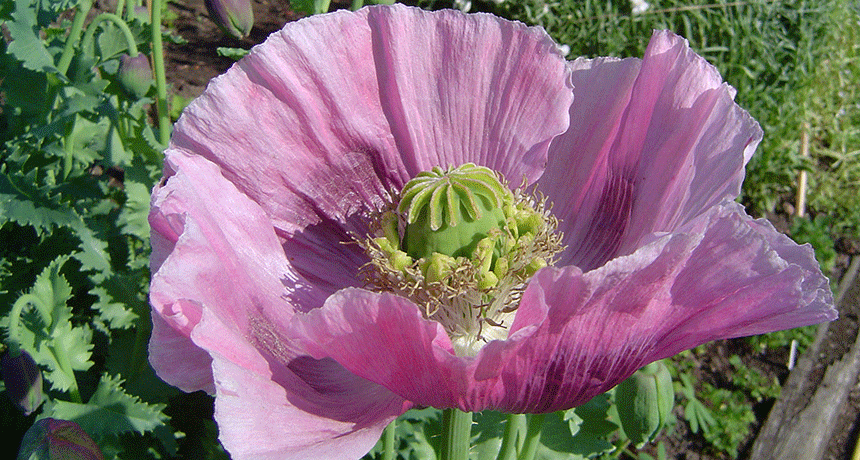
Opioid drugs work in the brain to stop pain. But the drugs also produce pleasure, which can make people want to take them over and over again.
- Earth
Soggy cereal gives clues to how rock dams collapse
To find out how ice sheets move and rock dams collapse, two researchers turned the attention to breakfast cereal.
- Ecosystems
Welcome to the Arctic’s all-night undersea party
Life teems in the frozen darkness of the Arctic night. But as the ice recedes and people move in, their light pollution may disturb the animals living there.
- Environment
Here’s the science you loved in 2018
When our readers read about science, they want to read about research that hits close to home, like smartphones, chocolate, vaping and more.
- Health & Medicine
What makes Aquaman special? He can take a lot of pressure
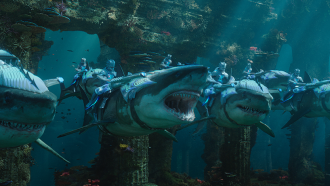
The new Aquaman movie makes life under the sea look pretty glamorous. In fact, we puny humans probably couldn’t take the pressure.
- Climate
Scientists Say: Rime ice
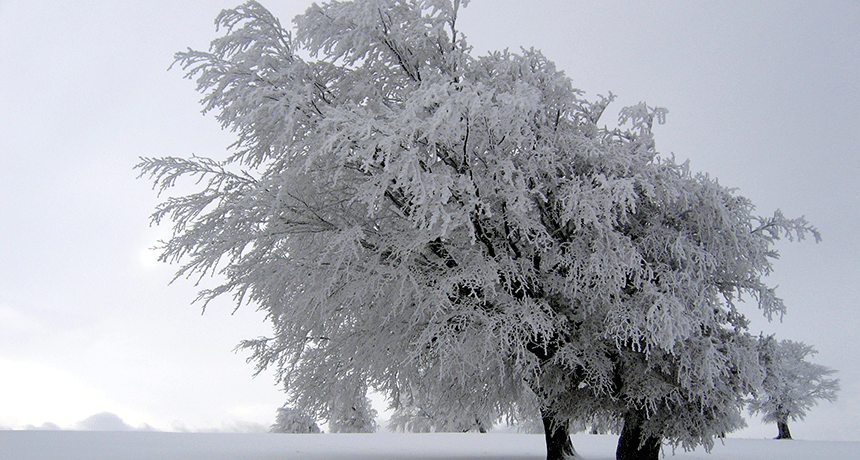
Rime ice is ice that forms when water freezes in a snap onto a surface.
- Animals
Scientists Say: Symbiosis
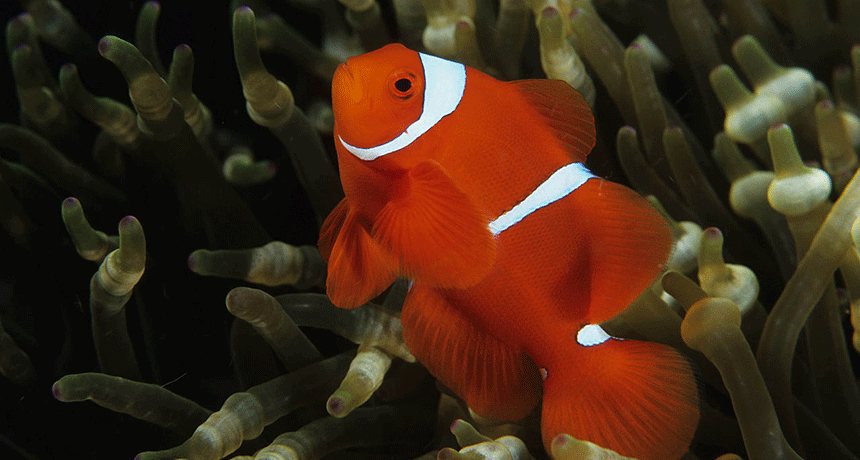
Two species can live together and support each other in a relationship called symbiosis.
- Animals
How do elephants eat cereal? With a pinch
Elephant trunks can grab everything from whole trees to cereal bits. To pick up fine grains, they press, then pinch.
- Math
Scientists Say: Statistical significance
Statistical significance is a phrase that describes how often a scientific difference might occur by accident.
- Space
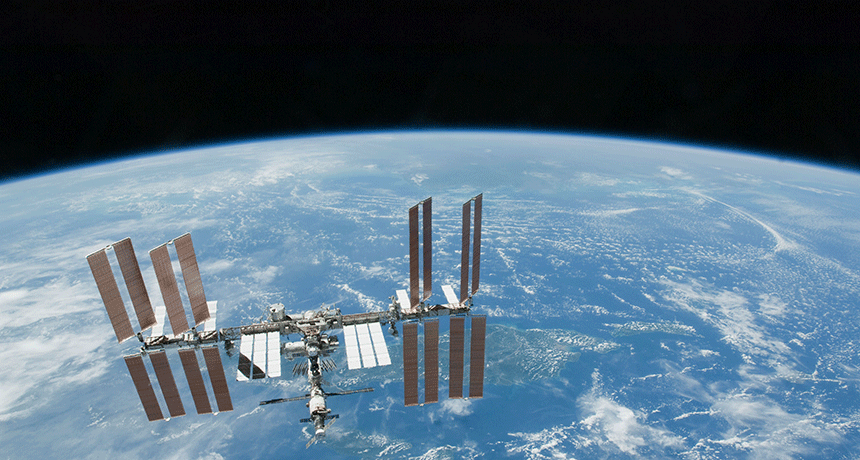
Scientists Say: Orbit
An orbit is the path one object in space takes around another, such as a planet, star or the center of an atom.
- Life
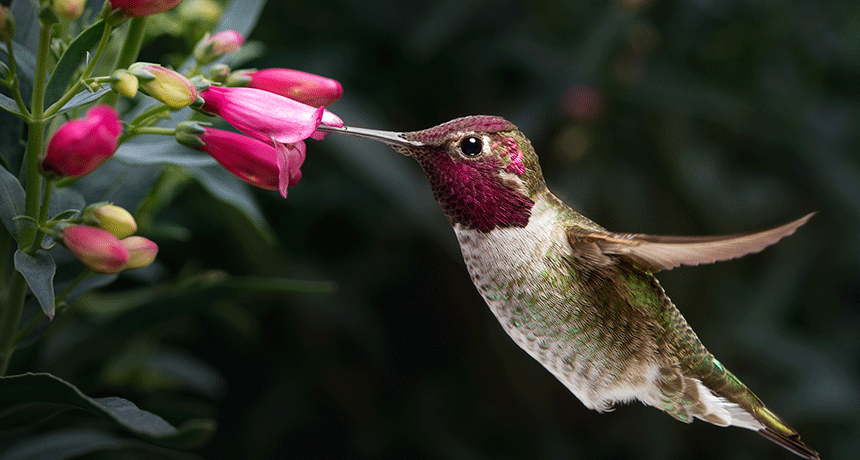
Scientists Say: Nectar
Nectar is a fluid filled with sugar that plants — especially flowers — produce. They use it to attract animals that will then spread their pollen to another plant.
- Physics
Harry Potter can apparate. Can you?
In the world of Harry Potter, wizards apparate and disapparate with ease. How would that work in the non-magical world? Physics has some answers.