
All Stories by Bethany Brookshire
- Chemistry
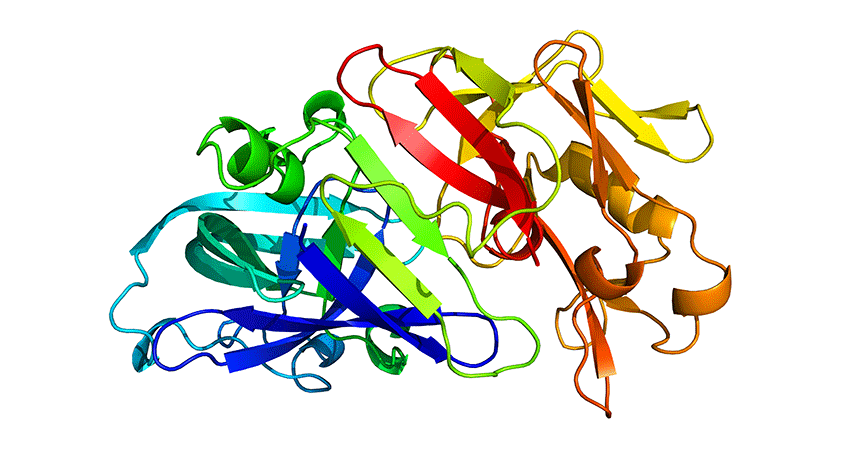
Scientists Say: Peptide
Peptides are short chains made of smaller molecules called amino acids. These chains can form proteins, and they can also do work on their own.
-
New movies give an inside look at the ‘Olympics’ of science fairs
These two documentaries take you behind the poster boards of the Intel International Science and Engineering Fair.
- Animals
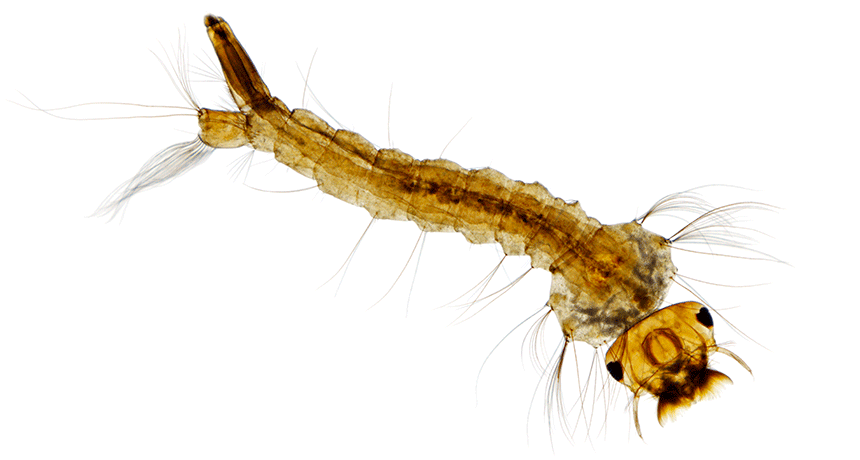
Scientists Say: Larva
Many insects, amphibians and fish have a life stage after they hatch that looks very different from the animal’s adult form. This life stage has its own name.
- Animals
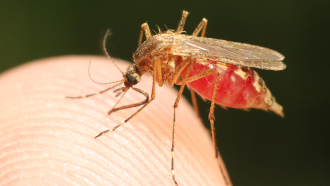
Cool Jobs: Sucking up science with mosquitoes
Mosquitoes are tiny, but the illnesses they spread can be deadly. To fight these germ spreaders, scientists need to get to know mosquitoes better — much better.
- Climate
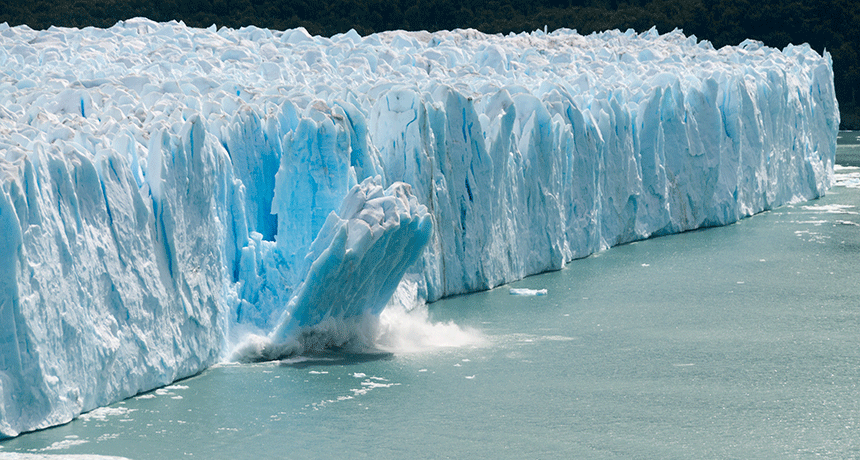
Scientists Say: Climate
Climate is the atmospheric conditions that are typical to a general area over a long period of time.
- Brain
Body heat due to exercise may reduce hunger
Why aren’t animals hungry after a workout? Brain cells that control appetite may sense the exercise heat — and keep you out of the kitchen, a new study finds.
- Earth
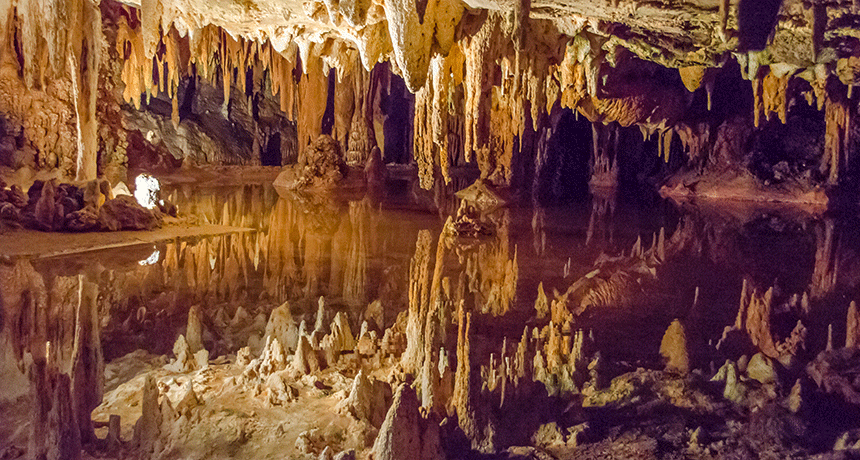
Scientists Say: Stalactite and stalagmite
Stalactites are mineral deposits forms on the ceilings of caves. Stalagmites are also mineral deposits, but they form on the floor of the cave.
- Animals
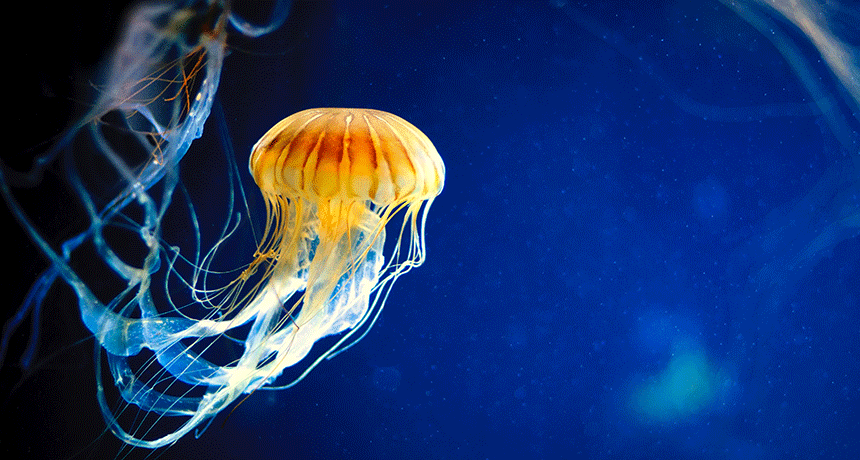
Scientists Say: Nematocyst
Nematocysts are special cells in some ocean critters, such as jellyfish, sea anenomes and corals. They have a barb coated in venom that shoots out at their prey.
- Health & Medicine
Scientists Say: Remission
Remission is a term used in medicine. It describes a disease that isn’t active anymore —whether it is cured or simply dormant.
- Physics
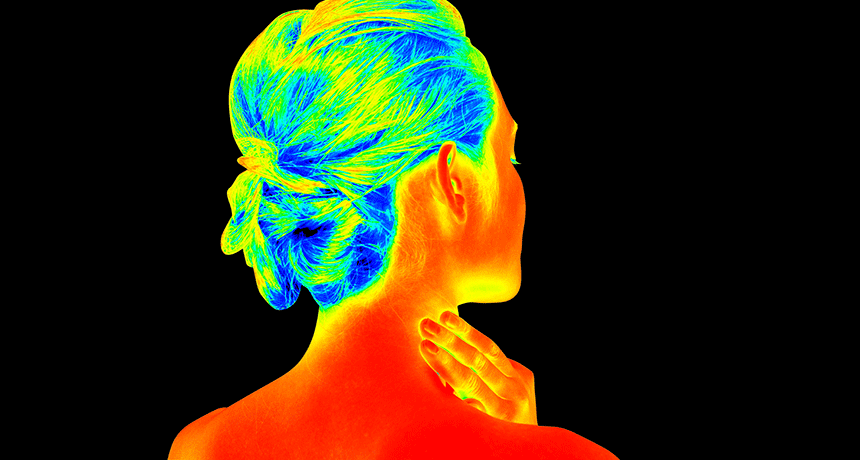
Scientists Say: Infrared
Infrared light belongs to a part of the spectrum that people can’t see. But this kind of light can be used to “see” the heat signatures of objects.
- Brain
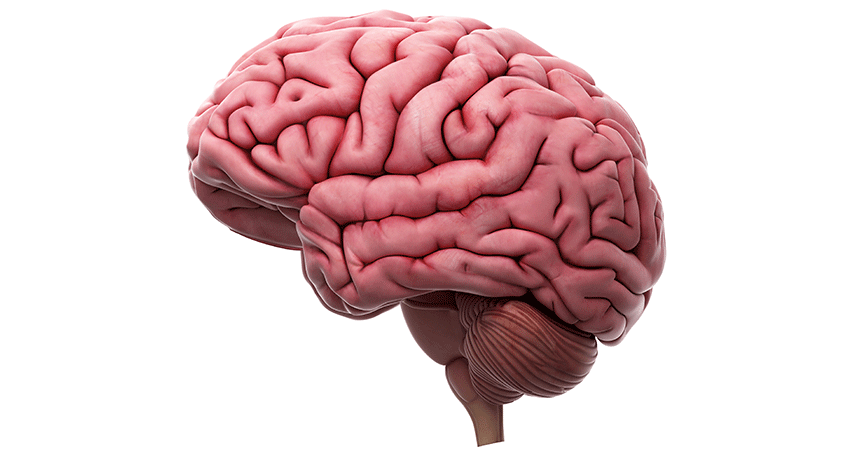
Scientists Say: Ventral striatum
The ventral striatum is an area of the brain that plays an important role in mood, learning and addiction. It has a lot of dopamine, a chemical messenger.
- Earth
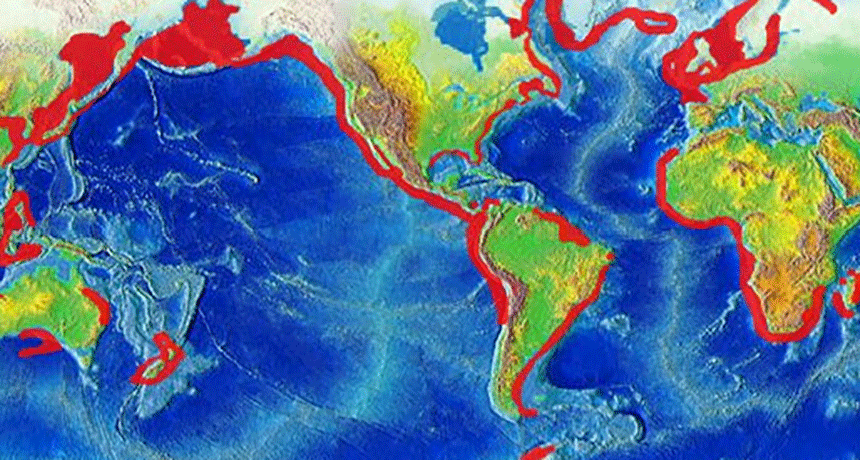
Scientists Say: Upwelling
This is a process in which a substance rises and spreads out over something else. Upwelling happens in the ocean, inside the Earth and even in a planet’s atmosphere.