
All Stories by Bethany Brookshire
-
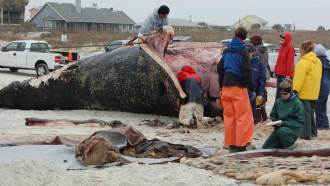
A gory good time with a dinosaur dissection
Scientists will never be able to examine a fresh, dead dinosaur. But thanks to TV magic, we can now see what it might be like if they could.
- Animals
Scientists Say: Autopsy and Necropsy
Sometimes when animals die, they need to be investigated. These examinations have two special names. One is for people, the other for non-human animals.
- Plants
Using plants to solve environmental problems
Problems in their communities suggested good research projects to three teens. Each wanted to tackle a different issue, from pollution to world hunger. To learn more about these issues, they turned to their local ponds, wetlands and gardens.
- Life
Scientists Say: Taphonomy
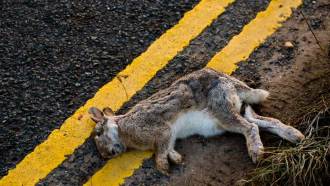
Studying what happens to plants and animals after they die can teach us about ecosystems and evolution. This study has a special name.
- Chemistry
The science of getting away with murder
A student took her love of crime shows to the next level. She did a science fair project to find out which cleaner works best at getting rid of bloody evidence.
- Science & Society
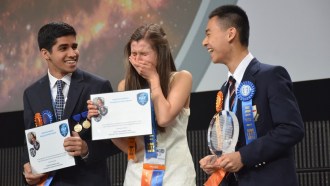
Intel International Science and Engineering Fair concludes with awards ceremony
Here’s our summary of the awards ceremony of the Intel International Science and Engineering Fair as told in tweets.
-
Teen finds more graphic heroines are ‘super’
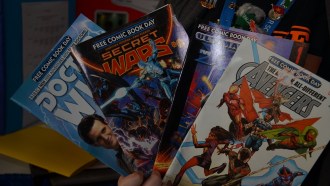
Why study the science depicted in comics when you can do a scientific study on the comics themselves. One teen finds women have more, bigger and better roles than ever.
- Brain
Scientists Say: MRI
MRI is a technique used to diagnose diseases and to study the body. The machine can map internal structures, all the way down to tiny blood vessels.
- Tech
Stepping out with a smarter cane
Many older people trip and fall on uneven ground. A Colorado teen has designed a ‘smart’ cane to help seniors avoid dangerous obstacles.
- Tech
Making cents of sounds
Some people give up when a vending machine rejects their money. But one student decided to turn his frustration into inspiration. Through research, he showed how to identify coins by the sounds they make.
- Brain
Hands-free but still distracted
When people aren’t distracted, they can see a traffic light change very quickly. But a teen scientist now shows that texting — even with a hands-free device — gets dangerously slow.
-
Inspired to do research
Finalists at the Intel International Science and Engineering Fair tell Eureka! Lab why they do scientific research.