
All Stories by Bethany Brookshire
- Planets
Scientists Say: Exoplanet
Eight planets orbit our sun. We give a slightly different name to the millions of similar bodies orbiting other stars.
- Climate
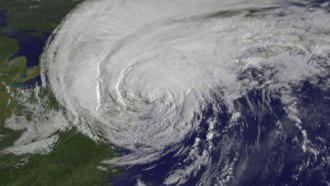
Scientists Say: Hurricane or typhoon?
Sometimes you read about hurricanes, and sometimes about typhoons. The difference? Location, location, location.
-
Cookie Science 17: Posters — the good and the bad
Scientists often initially report results of their experiments in a poster. It may seem easy, but here are some common mistakes to avoid.
- Planets
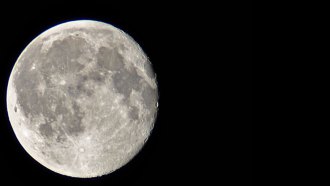
Scientists Say: Satellite
When we think of satellites, we often think of objects we send into space from Earth. But most satellites are actually all natural.
-
The accidental experiment at your bird feeder
Bird feeders might seem harmless, if not good for the environment. But the birds native to your area might view things differently, new data show.
- Health & Medicine
Scientists Say: Zoonosis
Sometimes diseases in people come from animals. These diseases have a special name.
- Chemistry
Taking chicken off the grill and into the lab
Grilling meat can produce carcinogens. A teen studied how to grill chicken to produce the fewest of these cancer-causing chemicals.
- Health & Medicine
Scientists Say: Carcinogen
We have all heard that some things — such as ultraviolent rays from the sun or dangerous chemicals — can cause cancer. These agents have a special name.
-
This “sun” dress mixes fashion and science
Allison Clausius, 18, combined her love for fashion and science in a dress that incorporates solar panels to charge portable electronics.
- Science & Society
Scientists Say: Forensics
When there’s blood, bones and fingerprints on a crime scene, it’s time to bring in the scientists. Their research is called forensics.
- Physics
Scientists Say: Photovoltaic
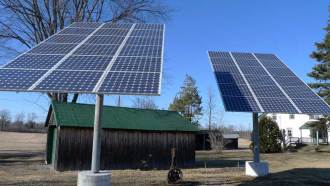
This effect allows us to convert sunlight into electricity and is a popular renewable energy source.
- Earth
Scientists Say: Eutrophication
When a body of water is filled with nutrients, algae and plants may take advantage. And their presence isn’t always a good thing.