
All Stories by Bethany Brookshire
-
The Mentos geyser: From demo to real science
It’s fun to make geysers with candy and soda. But it’s not an experiment. Here’s how to make it one.
- Physics
Scientists Say: Quantum
Quantum seems like a very complex word. But really, it’s a term used for something very, very small.
- Physics
Scientists Say: Viscosity
We know some liquids are thick and some are thin. This week’s word describes the property of these liquids to resist tension or pressure.
- Physics
Scientists Say: Torque
Some forces pull and some push. This force produces turning or twisting.
-
Oops. Correcting scientific errors
Scientific research is performed by people, and those people sometimes make mistakes they need to correct. Here’s a new example: Think of it as the “Case of the "Plagued Subway."
- Science & Society
Scientists Say: Social
Social is a single word used in many ways. But whether it’s social media or social order, social describes how we interact.
- Genetics
Scientists Say: Loci
The DNA in our bodies contains thousands of genes, all with different functions. We use a special word for their location.
-
Some everyday objects change everything
Refrigerators, deodorants, toasters and clothing. Often we give little thought to think these commonplace objects. A new museum exhibit shows why we should.
- Genetics
Scientists Say: Allele
What makes your eyes green or brown? Different versions of the same gene. We call these alternative forms by a separate name.
- Climate
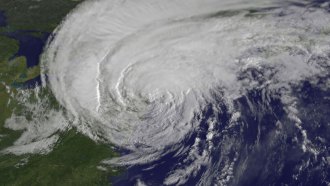
Scientists Say: Cyclone
These strong storms have different names in different oceans. But all are cyclones.
-
Cookie Science 18: Eating it up
My cookie baking is at an end, but the steps in Cookie Science can be used to help you conduct any experiment in the kitchen and beyond.
-
Fall into science with a new podcast
There are science shows and science books and science games for kids. Now there’s also an engaging science podcast.