All Stories by Jake Buehler
- Animals
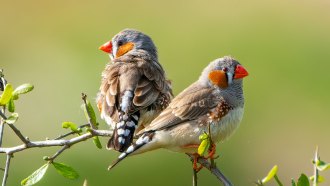
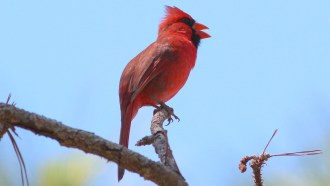
Songs prep unhatched finches’ brains for a hot world
Adult finches make “heat calls” to their eggs when temps rise. Exposure to those songs trigger chicks' developing brains to change in ways that better handle heat.
- Animals
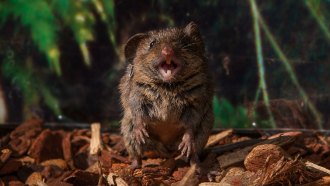
Here’s how ‘singing’ mice belt out their tiny tunes
Balloon-like air sacs in the mice's throats create whistling songs. No other animal is known to make calls in this way.
- Animals
Giant school bus–sized octopuses may have once ruled the oceans
Some of these predators were as long as whales. Roaming the seas more than 72 million years ago, the octopuses appear to have been the largest invertebrates ever known.
- Animals
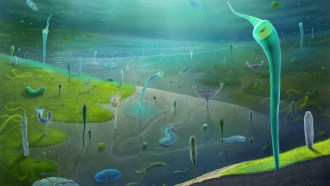
The dawn of animal evolution saw a bizarre array of sea creatures
Newfound fossils turned up a strange zoo of often-complex creatures, including some suggesting that evolution of left-right symmetry occurred earlier than once though.
- Animals
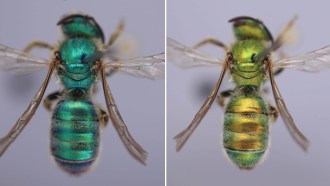
Like living mood rings, these bees change color when it turns humid
Humidity makes North American sweat bees change color. This trait could be widespread among shiny insects, some biologists now suspect.
- Animals
Flat-faced dogs often struggle to breathe easy
Pugs and bulldogs aren’t the only dogs with breathing problems. Pekingese, Japanese chins and other squish-faced breeds have this issue, too.
- Animals
Wind won’t keep hungry yellow jackets away from your picnic
Hungry yellow jackets are really good at tracking attractive odors. Even in windy and difficult conditions, they can find your barbecue.
- Animals
Mummies suggest a way to help reintroduce cheetahs to Arabia
DNA from Arabian cheetah remains reveals that these now-extinct populations might be replaced by rewilding close cheetah relatives from northwest Africa.
- Animals
Birds are singing longer, thanks to light pollution
In light-polluted areas, birds spend an average of 50 minutes more per day singing. It’s unclear how that extra time might hurt or help the birds.
- Animals
Horses became gentle and easy to ride thanks to two gene mutations
Horse breeders altered two genes by targeting certain traits in horses. One made the animals tamer. Another made their backs sturdy enough to carry riders.
- Fossils
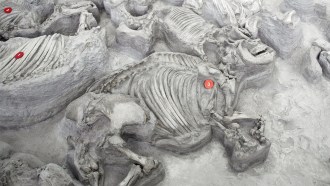
North American rhinos once gathered in large, hippo-like herds
The stumpy-legged rhinos survived until about 12 million years ago, when a supervolcano’s ashfall smothered their world.
- Animals
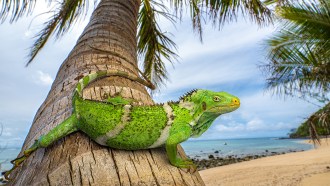
Some iguanas may have rafted across the Pacific 30 million years ago
The iguanas' epic 8,000-kilometer trip — one-fifth of Earth’s circumference — may be the longest made by a flightless land vertebrate.