
All Stories by Stephen Ornes
- Physics
Quark quartet forms exotic particle
Quarks are important building blocks of matter, usually bound together as pairs or triples. Now some have formed a quartet. Scientists confirmed the existence of a particle made of four quarks stuck together. Such strange stuff may have been more common in the earliest universe, the scientists say.
- Environment
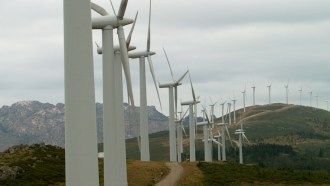
‘Greener’ energy needed now, group warns
To avoid a looming environmental crisis brought on by global warming, people need to rely more on renewable energy sources. And fast. Without quick action, the world may face a harsh future, warns the latest report from the Intergovernmental Panel on Climate Change.
- Animals
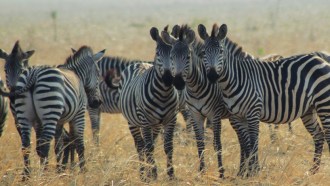
One plus to wearing stripes
A zebra’s black-and-white coat doesn’t offer cooling or camouflage, researchers find. Instead, its stripes appear to keep away biting flies — and deadly diseases.
- Microbes
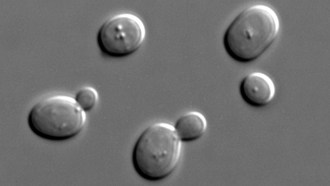
A success for designer life
Synthetic biologists are scientists who create custom organisms in the lab. Their efforts have just taken a big step forward. They have created the first lab-made yeast chromosome. The advance could lead to entirely synthetic organisms customized to produce food, fuel or medicine.
- Physics
Filter lets in only the right light
Scientists have built a light filter that only permits light coming from one desired angle to pass through. Built from alternating layers of transparent materials, it could help minimize the glare in telescopes and cameras or boost the efficiency of solar cells.
- Health & Medicine
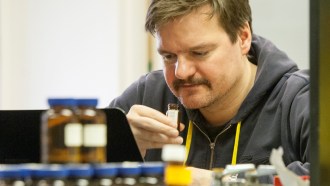
The nose knows a trillion scents
There's a long-standing claim that people can identify 10,000 different odors. But a new study suggests that people can actually identify at least 10,000 times that many scents.
- Animals
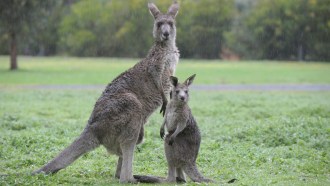
Kangaroos have ‘green’ farts
The farts and belches of these animals contain less methane than do those from other big grass grazers. Microbes in their digestive tract appear to explain the ‘roos lower production of this greenhouse gas, a new study finds.
- Earth
Explainer: Telling a tsunami from a seiche
Waves that hit coastlines with ferocious power, tsunamis are one of the planet’s most devastating forces of nature. And seiches: They’re tsunamis little, but still potentially deadly, cousins.
- Animals
Quieter vibes for city spiders
How much a web vibrates affects how well a spider senses when that web has captured prey. But webs attached to concrete, plastic and other artificial materials vibrate less than do those built on natural materials, such as twigs or leaves.
- Microbes
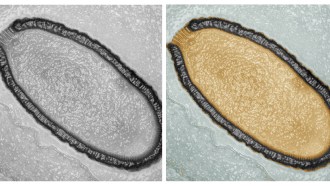
Return of the giant zombie virus
Scientists have discovered a new type of virus in Siberian soils. It's the largest virus ever discovered. And guess what: It could infect cells even after 30,000 years in cold storage.
- Space
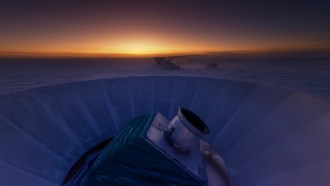
Waves from the birth of time
Inflation is the idea that in the split-second after the Big Bang, the universe exploded into huge-ness. Although the hypothesis is 30 years old, evidence to confirm it had been lacking. Until now.
- Physics
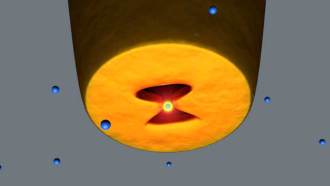
Laser tweezers grab nano bits
An optical fiber, a bit of gold and a laser make up a new type of tweezers. Scientists may soon use it to pick up and move around individual viruses or proteins.