All Stories by Thomas Sumner
- Planets
Super-earths not a place for plate tectonics
Plate tectonics build big mountain ranges on Earth. But super-Earths would be too big for such movements to occur, a study finds.
- Earth
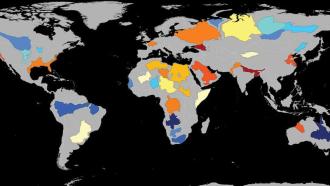
Many of Earth’s groundwater basins are drying out
A majority of Earth’s largest underground reservoirs of water are being depleted. These aquifers lose more water each year than they gain.
- Climate
Pacific hurricanes to strengthen as Earth warms
Global warming is heating up the oceans. That is causing waters to warm. As a result, Pacific storms — called typhoons — will become more destructive.
- Earth
Glaciers on ice — for now
A rise in emissions of carbon dioxide, a greenhouse gas, isn’t just warming Earth. It also could be delaying the onset of the next global cool-down.
- Earth
Asteroids boiled young Earth’s oceans
At least two asteroids hit Earth 3.3 billion years ago. This superheated the atmosphere, boiled the oceans and shaped how early life evolved.
- Climate
Carbon dioxide levels rise fast and high
The buildup of carbon dioxide in the atmosphere is rising faster than at any time since dinosaurs roamed the Earth. The burning of fossil fuels is largely to blame.
- Climate
Scientists ‘see’ thunder for first time
Scientists have captured the first image of thunder. The map shows the relative strengths of the sound waves emanating from the loud clap.
- Brain
Twisters: Can warning people too early backfire?
If people think they have enough time to flee a tornado, they may try to drive away, information shows. This could leave them stuck in traffic — with no protection — when the storm does show up.
- Earth
Nepal earthquake offers hints of worse to come
The magnitude 7.8 earthquake that crumbled much of Nepal’s capital city could be overshadowed by larger future earthquakes along the Himalayas, scientists say.
- Earth
What sent Hawaii’s mountain chain east?
A single shaft of spewing hot rock created an enormously long chain of mostly undersea mountains in the western Pacific. That chain takes an unexpected eastern curve. The reason, scientists now think, may be a gobbled-up tectonic plate.
- Climate
Arctic warming bolsters summer heat
Rapid warming in the Arctic is sapping summer storms of their power to cool. That worsens heat waves across the Northern Hemisphere.
- Earth
Ancient ocean linked to supercontinent’s breakup
The supercontinent Pangaea started breaking apart 200 million years ago. This may have been triggered by the shrinking of the Tethys Ocean, a new study finds.