Questions for ‘Spying on the secret lives of boobies’ 
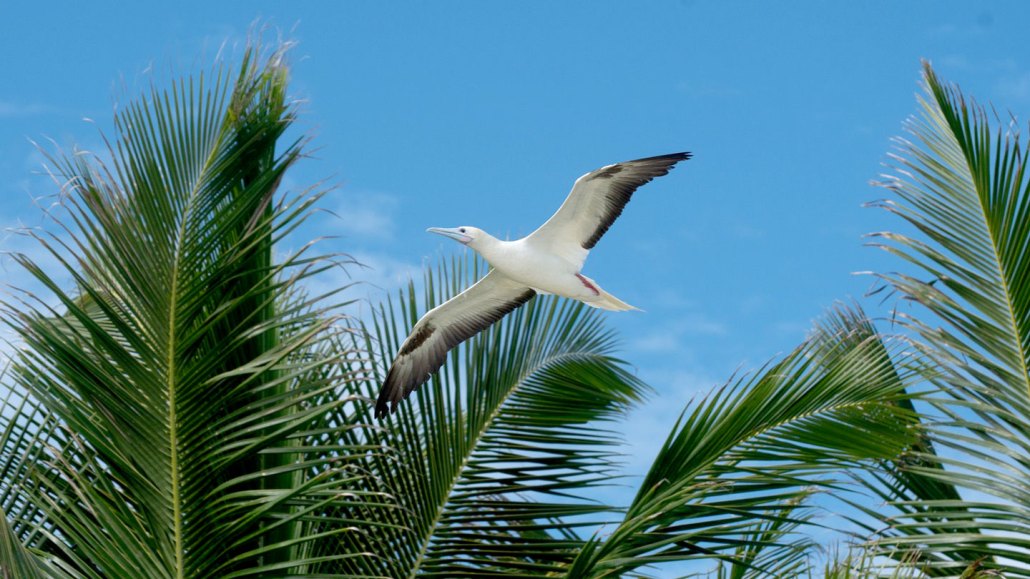
a red footed booby soars overhead against palm fronds and a bright blue sky

During the day, red-footed boobies leave the tropical islands where they nest and fly far out to the open ocean in search of food. Until recently, scientists knew little about their lives at sea.

Robin Freeman

To accompany Spying on the secret lives of boobies’  

SCIENCE

Before Reading:

  1. List three animal species that spend time both on land and in or near the water. Do you think these species play unique roles in their ecosystems? Explain why or why not.
  2. If you could attach a camera to any animal you listed in Question 1 of Before Reading and watch its behavior for a day, which animal would you choose? Briefly summarize what you predict a typical day might look like in the life of this animal.

During Reading:

  1. Where is the Chagos Archipelago? How many islands does it contain?
  2. Describe the diet of the red-footed booby.
  3. List two different tools that scientists might use to track the behavior or travel patterns of a particular seabird.
  4. Give one physical reason why boobies are a good bird species for carrying data-logging devices.
  5. Describe one notable change to the boobies’ hunting habits on windy days.
  6. What does Abigail Schiffmiller mean when she talks about a “fish storm”? What causes one?
  7. What is one advantage for a booby to catch a fish in the air rather than in the water?
  8. What is guano? Name one valuable nutrient it contains.
  9. Approximately how many days does a typical adult booby spend on land each year?
  10. Why did researchers want to know how much boobies poop?

After Reading:

  1. Imagine a small tropical island that struggles with overfishing. Besides decreases in fish populations, locals notice other changes too. For one thing, seabirds used to be prevalent on this island. But lately, they are nowhere to be seen. Residents also notice that wild berries and root vegetables that once grew prolifically on the island are scarcer and scarcer each year. Based on what you have read in this story, how might the locals’ observations of vegetation changes on land be connected to overfishing in the ocean? Point to information from this story to support your answer.
  2. What is another coastal species — not necessarily a bird — that you think might play a role in linking land and water ecosystems? Speculate on how this species might connect the two ecosystems, similar to the boobies in this story. To what extent might the research approaches described in this story be used for investigating this other species? Briefly explain your answer.