Earth and Human Activity
- Animals
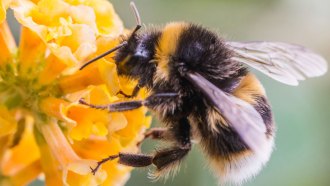
Pollen can become bee ‘junk food’ as CO2 rises
Increasing levels of the greenhouse gas are changing diminishing the food value of pollen, bees’ only source of protein.
- Chemistry
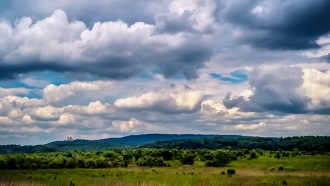
Particles in air help fatten clouds’ water droplets
Making their own clouds has shown scientists how the fattest water droplets form. Understanding this could lead to better forecasts of climate change.
- Earth
Quake risk in some central states rivals California’s
Risks of tremors in some central U.S. states are as high as those in quake-prone California. The reason: waste fluids from oil and gas drilling.
- Earth
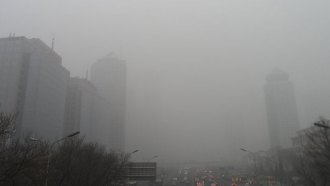
Breathing very dirty air may boost obesity risk
Breathing dirty Beijing air made rats heavier and less healthy than rats breathing clean air. Scientists now worry such polluted air may do the same thing to people.
- Environment
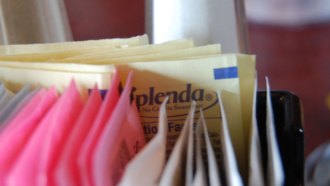
Not so sweet: Fake sugar found at sea
Sucralose — sold in stores as Splenda — has begun turning up in seawater. This raises concern about the fake sweetener’s impacts on the environment.
- Chemistry
Gulf oil spills could destroy shipwrecks faster
In the Gulf of Mexico, leftover crude oil from the Deepwater Horizon spill may be speeding the corrosion of old shipwrecks.
- Tech
Powered by poop and pee?
Scientists are developing methods to not only remove human waste from wastewater, but also to harness the energy hidden within it.
- Chemistry
Olive oil untangles plastic
Vegetable oils can make plastic fibers stronger. And the process is safer and better for the environment than other detanglers.
- Animals
Using dolphins to find unknown ocean pollutants
Long-lasting pollutants may threaten marine mammals and human health. To find those pollutants, scientists are sampling blubber, then running the fatty material through new types of tests.
- Climate
Arctic ice travels fast, carrying pollution
Climate change is melting old sea ice in the Arctic. Now, younger, thinner ice is migrating far and fast, taking pollutants with it.
- Climate
Concerns about Earth’s fever
Burning fossil fuels is causing the planet to heat up, causing weather patterns to change, sea levels to rise and diseases to spread.
- Climate
Explainer: How scientists know Earth is warming
Scientists can calculate global temperatures, both present and past. Their findings show that the planet is rapidly heating up.