HS-ESS2-1
Develop a model to illustrate how Earth's internal and surface processes operate at different spatial and temporal scales to form continental and ocean-floor features.
- Earth
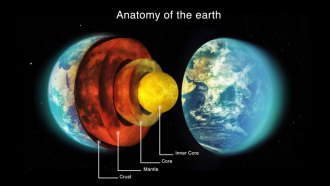
Explainer: Earth — layer by layer
Explore the sizzling heat, unimaginable pressures — and some surprise diamonds — that sit beneath our feet. This is the side of Earth that you can’t see.
- Earth
Explainer: Understanding geologic time
Geologic time is unimaginably long. Geologists puzzle it out using a calendar called the Geologic Time Scale.
- Earth
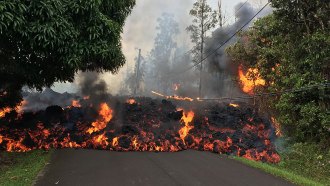
How long will Kilauea’s new eruption last?
A government volcano expert answers burning questions about the ongoing Kilauea eruption.
- Earth
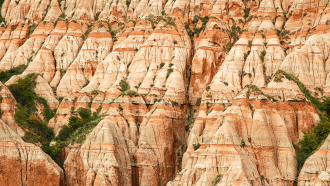
Explainer: What makes dirt different from soil
Although most people use the terms dirt and soil interchangeably, scientists argue that they shouldn’t. Soil has provenance — meaning history. Dirt doesn’t.
- Climate
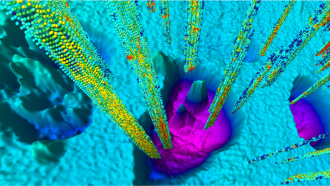
Ancient Arctic ‘gas’ melt triggered enormous seafloor explosions
Methane explosions 12,000 years ago left huge craters in bedrock on the Arctic seafloor. Scientists worry more could be on the way today as Earth’s ice sheets melt.
- Climate
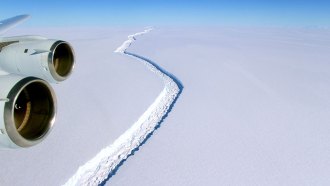
Massive ice shelf is poised to break off of Antarctica
A fast-growing crack in Antarctica’s Larsen C ice shelf could soon release a truly huge hunk of ice into the ocean.
- Climate
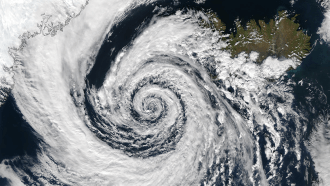
‘Weather bomb’ storms send tremors through Earth
Scientists have detected tiny tremors in the Earth coming from an extreme storm. One day, those tiny tremors could help reveal Earth’s innermost secrets.
- Earth
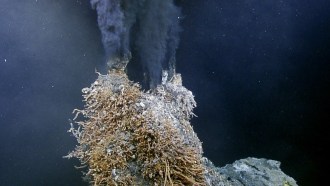
Seafloor hosts surprising number of deep-sea vents
A new sensor detects changes in seawater chemistry and finds far more ecosystem-supporting seafloor vents than scientists had believed were out there.
- Earth
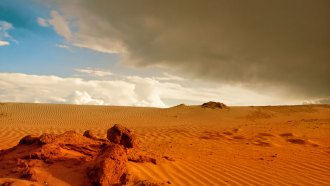
Dust creates deserts in the sky
Vast rivers of dust flow through the sky. This invisible force shapes our world in profound ways. And scientists are finally homing in on a major source.
- Earth
Cool Jobs: Getting to know volcanoes
It’s too hot to explore the insides of a volcano. These scientists examine their lava, their low-frequency rumblings and their ‘vog’.
- Earth
Explainer: What is a tsunami?
Earthquakes and landslides can create huge waves that travel across oceans.
- Earth
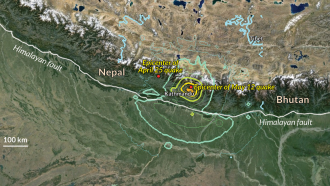
Major new quake rattles Nepal
A new earthquake struck Nepal on May 12. Its tremors were centered on a new region.