HS-ESS2-1
Develop a model to illustrate how Earth's internal and surface processes operate at different spatial and temporal scales to form continental and ocean-floor features.
- Earth
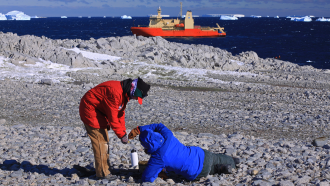
Uplifting Antarctic shores point to accelerating loss of glaciers
It appears the Pine Island and “Doomsday” Thwaites glaciers are losing ice — and shrinking faster — than at any time in the past 5,500 years.
- Chemistry
Let’s learn about diamond
Diamond is born under extreme heat and pressure inside Earth and elsewhere in the universe.
- Earth
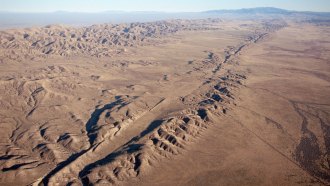
Scientists Say: Fault
A fault is a crack in Earth’s crust where pieces of rock scrape past each other.
- Earth
Tiny gemstones show when Earth’s crust first started moving
Chemical hints observed in zircons suggest when the important process of plate tectonics first took off.
- Earth
Scientists Say: Richter Scale
The Richter scale and other magnitude measures reveal the strength of an earthquake.
- Earth
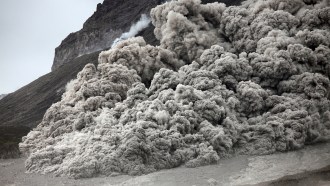
Volcanic avalanches may be more destructive than previously thought
Pressures within these pyroclastic flows may be as much as three times as high as observations had suggested.
- Climate
The ‘Doomsday’ glacier may soon trigger a dramatic sea-level rise
The ice shelf that had kept it in place could fail within five years. That would speed the glacier’s slip into the ocean, boosting a rise in sea levels.
- Earth
Scientists Say: Avalanche
The word avalanche usually refers to a huge snowslide down a mountain, but it can also be used to describe any large mass of material tumbling downhill.
- Earth
What can ‘silent earthquakes’ teach us about the next Big One?
Earthquakes usually last seconds. But sometimes, they can last days, or even years. Here’s what scientists are learning about these “slow-slip events.”
- Earth
Scientists Say: Magma and lava
The word magma refers to molten rock deep inside Earth. That rock is called lava when it reaches Earth’s surface.
- Earth
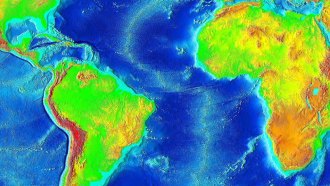
Rock rising from below the Atlantic may drive continents apart
Molten rock rising from the deep mantle at the Mid-Atlantic Ridge may drive plate tectonics there more than had been expected.
- Earth
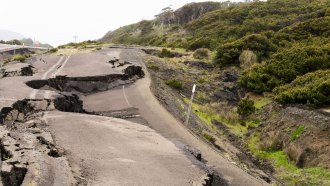
Scientists Say: Earthquake
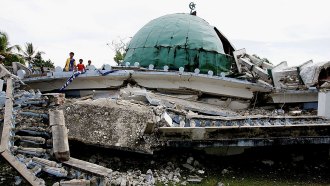
An earthquake is a sudden and sometimes violent shaking of the ground.