HS-ESS2-5
Plan and conduct an investigation of the properties of water and its effects on Earth materials and surface processes.
- Earth
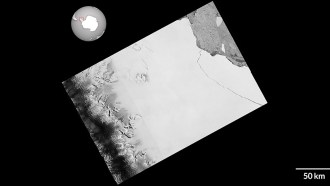
Antarctic ice shelf sheds Delaware-sized iceberg
Larsen C is a major ice shelf in Antarctica. An iceberg the size of Delaware has just splintered off of it in one of the largest calving events ever recorded.
- Oceans
Teen’s invention can warn of deadly rip currents
A teen lifeguard from Australia has invented a buoy that can alert swimmers to the strong, swift and deadly rip currents that can sweep them dangerously far offshore.
- Climate
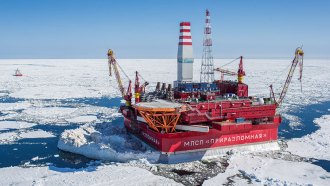
Arctic Sea could be ice-free by 2050
Everyone contributes to the melting of Arctic sea ice, and all are in danger of making summer ice disappear there completely by 2050, a new study finds.
- Climate
Cool Jobs: Wet and wild weather
How’s the weather? Forecasts rely on scientists and engineers who collect and interpret data gathered on the ground, in the sky and way up in space.
- Earth
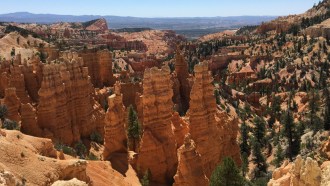
Scientists Say: Hoodoo
When softer rocks are covered with a harder rock layer, weathering can wear away the softer stone. This will leave behind tall thin towers — hoodoos.
- Chemistry
Concrete science
Teen researchers are exploring ways to strengthen this building material, use it for safety purposes and use its discarded rubble.
- Earth
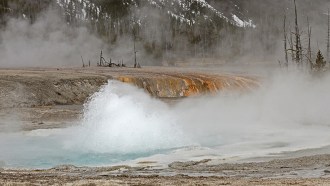
Carbon dioxide could explain how geysers spout
A new study overturns 150 years of thinking about Yellowstone’s geysers. Carbon dioxide, not just hot water, may be driving those spectacular eruptions.
- Climate
Arctic ice travels fast, carrying pollution
Climate change is melting old sea ice in the Arctic. Now, younger, thinner ice is migrating far and fast, taking pollutants with it.
- Earth
Explainer: What is a tsunami?
Earthquakes and landslides can create huge waves that travel across oceans.
- Physics
Bracing sand sculptures with gravity
Natural sculptures of sandstone withstand strong winds and rains. The reason, a new study concludes: Gravity holds the sand grains together.
- Earth
Explainer: Telling a tsunami from a seiche
Waves that hit coastlines with ferocious power, tsunamis are one of the planet’s most devastating forces of nature. And seiches: They’re tsunamis little, but still potentially deadly, cousins.
- Earth
Intel STS finalist takes on arsenic poisoning
Concerned about arsenic poisoning in Bangladesh, Intel Science Talent Search finalist Thabit Pulak invented an affordable filter to help people remove this toxic pollutant from their drinking water.