HS-ESS2-5
Plan and conduct an investigation of the properties of water and its effects on Earth materials and surface processes.
- Earth
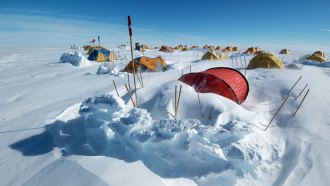
A natural ‘cathedral’ lurks deep under Antarctic ice
By drilling into this cavern, scientists have opened a window into the mysterious world of hidden lakes, their occupants — and rivers that run uphill.
- Earth
Under the ice, a hidden lake hints at its origin — and coming end
Lake Mercer may serve as a model for better understanding the birth and life of Antarctica’s hundreds of subglacial lakes.
- Earth
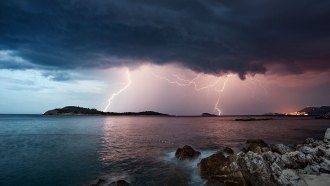
Analyze This: Salt may quash lightning over the sea
Bits of airborne salt may help raindrops form, removing water from clouds before it can freeze as part of the process that makes lightning.
- Climate
Greenland’s inland ice is melting far faster than anyone thought
Inland melting of the Northeast Greenland Ice Stream is accelerating — and may contribute far more to sea level rise than earlier estimates suggested.
-
-
- Earth
Uplifting Antarctic shores point to accelerating loss of glaciers
It appears the Pine Island and “Doomsday” Thwaites glaciers are losing ice — and shrinking faster — than at any time in the past 5,500 years.
- Science & Society
This sun-powered system delivers energy as it pulls water from the air
The device not only produces electricity but also harvests water for drinking or crops. It could be especially useful in remote and dry parts of the world.
- Earth
Let’s learn about Earth’s secret stash of underground water
Groundwater provides drinking water to billions of people and is used to water crops worldwide.
- Climate
The ‘Doomsday’ glacier may soon trigger a dramatic sea-level rise
The ice shelf that had kept it in place could fail within five years. That would speed the glacier’s slip into the ocean, boosting a rise in sea levels.
- Earth
From icebergs to smoke, forecasting where dangers will drift
Smoke drifts. Fish eggs float downstream. Where such drifting things end up may seem a mystery. But research can predict where they’ll end up.
- Climate
Scientists Say: El Niño and La Niña
El Niño and La Niña are part of a climate cycle that results in major weather changes every few years.