HS-ETS1-4
Use a computer simulation to model the impact of proposed solutions to a complex real-world problem with numerous criteria and constraints on interactions within and between systems relevant to the problem.
- Climate
Research on climate and more brings trio the 2021 physics Nobel Prize
Syukuro Manabe and Klaus Hasselmann pioneered work on simulations of Earth’s climate. Giorgio Parisi probed complex materials.
- Animals
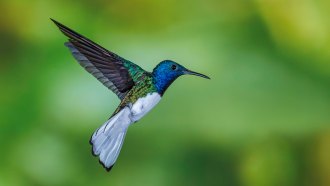
Analyze This: Some female hummingbirds go undercover
Some female white-necked jacobin hummingbirds boast bright blue colors similar to males. That may help females blend in to avoid attacks.
- Health & Medicine
Cannabis may alter a teen’s developing brain
Marijuana use between ages 14 and 19 was linked to faster thinning of brain regions important in decision-making.
- Environment
Wildfire smoke seeds the air with potentially dangerous microbes
Studies now show that most wildfires don’t kill microbes. That’s fueling worries about what risks these smoke hitchhikers might pose to people.
- Tech
Headphones or earmuffs could replace needles in some disease testing
A new system that uses earmuffs to collect gases coming out the skin could help doctors diagnose a variety of diseases, scientists say.
- Animals
Endangered or just rare? Statistics give meaning to the head counts
Whether studying tiny birds or massive whales, researchers collect a lot of data. The field of statistics helps them make sense of those data.
- Archaeology
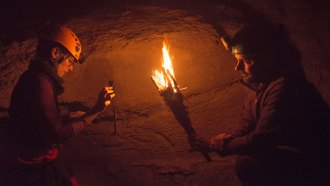
How torchlight, lamps and fire illuminated Stone Age cave art
Experiments with stone lamps and torches are helping scientists see 12,500-year-old cave art with fresh eyes.
- Physics
Nuclear clocks are nearly here
More precise clocks could improve technologies such as GPS and help scientists test major ideas in science.
- Animals
Mantis shrimp inspires somersaults of new soft robot
Its rolling acrobatics allow this robot to move especially swiftly — much as a fictional new Disney character can.
- Climate
Climate may have sent drift of the North Pole toward Greenland
This mid-1990s shift in the pole’s movement was driven by glacial melt. And that was triggered in part by climate change, a new study reports.
- Animals
The secret to T. rex‘s incredible biting force is at last revealed
The force of a T. rex bite was roughly 6 metric tons. A new study points to what’s behind that mighty force.
- Animals
Only 3 percent of Earth’s land is unchanged by people
A sweeping survey of land-based ecosystems finds that very few still support all the animals they used to. Reintroducing lost species could help.