MS-ESS1-1
Develop and use a model of the Earth-sun-moon system to describe the cyclic patterns of lunar phases, eclipses of the sun and moon, and seasons.
- Earth
Scientists Say: Pole
A pole is either of two opposite ends of a molecule, magnet, battery, planet or other object.
- Planets
Ancient volcanoes may have left ice at the moon’s poles
Volcanic eruptions billions of years ago may have produced several temporary atmospheres on the moon that held water vapor.
- Physics
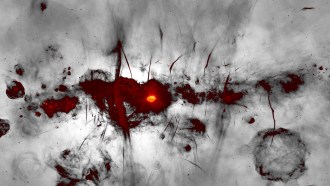
Wild art? No, it’s a radio image of the heart of our Milky Way
Eyelash-like radio filaments accent the brightest feature in this image — a supermassive black hole.
- Earth
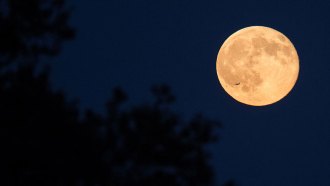
Moon’s orbital wobble can add to sea-level rise and flooding
In a dozen years or so, the tide-enhancing effects of a wobble in the moon’s orbit should lead to dramatically higher sea levels in some coastal cities.
- Climate
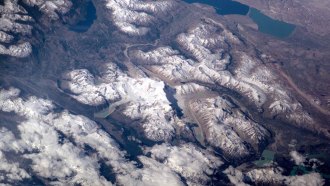
Climate may have sent drift of the North Pole toward Greenland
This mid-1990s shift in the pole’s movement was driven by glacial melt. And that was triggered in part by climate change, a new study reports.
- Physics
Scientists discover likely source of the moon’s faint yellow tail
These sodium atoms are part of the debris kicked up from the moon’s surface, mostly by micrometeorites, two new studies conclude.
- Physics
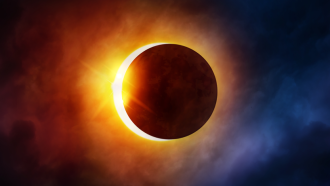
Eclipses come in many forms
Eclipses are one of nature’s most awesome spectacles, and scientists have learned a lot by observing them and related celestial alignments — occultations and transits.
- Physics
Machine simulates the sun’s core
A machine heats iron atoms to temperatures that match the interior of the sun. This has helped solve a solar mystery.
- Planets
Heavenly research
Groundbreaking research in astronomy landed four high school seniors spots as finalists in the 2014 Intel Science Talent Search.
-