An avalanche inspired this forecaster to keep others safe
Chris Dickson uses science to help Colorado snow enthusiasts avoid danger
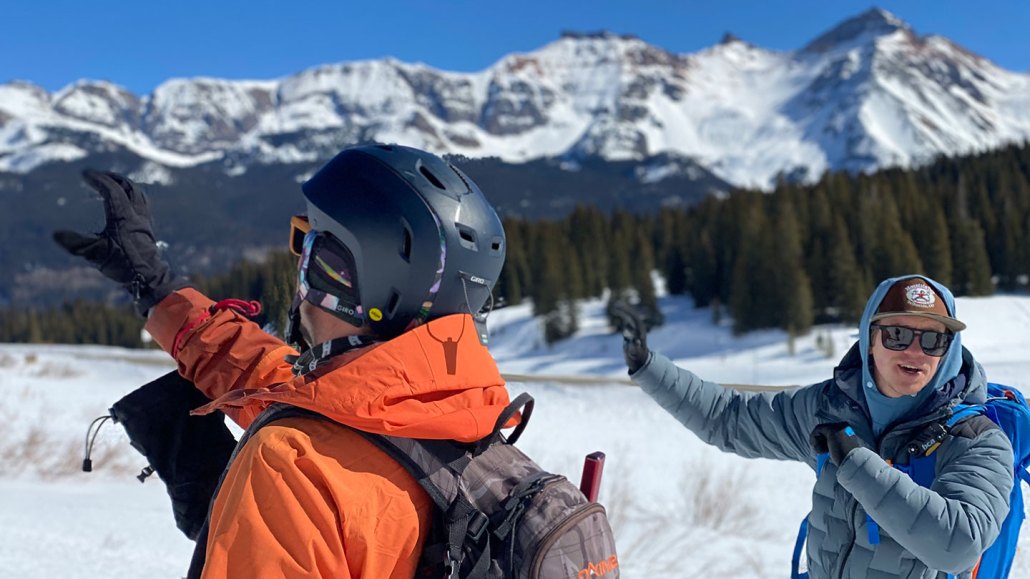
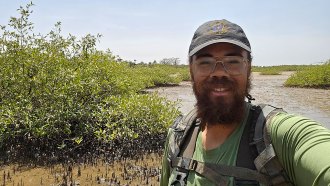
An avalanche occurs when a large mass of snow breaks away and rapidly rushes downhill. These events can be very dangerous, even deadly. Chris Dickson (right) helps people in Colorado avoid these dangers with daily avalanche forecasts.
C. Dickson
Back in 2017, on May 19, Chris Dickson faced a close call. That day, he was skiing in the San Juan Mountains in southwest Colorado, eager to try out snow that had accumulated from recent storms. That fresh snow, though, proved to be unstable. Dickson found himself in an avalanche.
The snow partially buried Dickson. With a crunching motion, he managed to get himself free. But, he says, “That was a very scary eye-opener to the potential hazard of avalanches.” Dickson had moved to Colorado to study environmental science. The avalanche changed his goals. “[It] inspired me to want to help other people avoid having that experience,” he says.
Dickson became an avalanche educator, teaching people how to safely navigate the mountains in winter. But he eventually got the itch to pursue the science behind these scary events. “I wanted to spend more time digging into the snow and analyzing it,” he says.
Today, Dickson serves as an avalanche forecaster for the Colorado Avalanche Information Center based in Denver. He creates daily forecasts that help the public understand their risk for avalanches before hitting the snow. “I’m incredibly lucky that I survived,” he says. “I took that lesson as a real learning opportunity.” In this interview, he shares his experience and advice with Science News Explores. (This interview has been edited for content and readability.)
What’s a common misconception about your job?
How much we rely on computers. Computer modeling and technology help us predict the conditions for areas that we can’t get to on foot. It’s also our primary way of communicating the hazard to the public.
Mostly, I’m looking at weather stations to check out wind and precipitation readings. We also read observations submitted by the public. I actually spend more time at the computer than I do in the mountains. I’d say I enjoy them both, but it’s much nicer to be in the mountains than at the computer.
What does a typical day in the field look like for you?
Before I head out, I create a fieldwork plan using computer data. It involves a lot of mapping since I’m creating my route through the mountains. I share it with a coworker who does a fieldwork check with me. I explain to them what I’m trying to target that day. I note where I’m going and with whom. I also include how I’ll manage the risk while I’m out there.
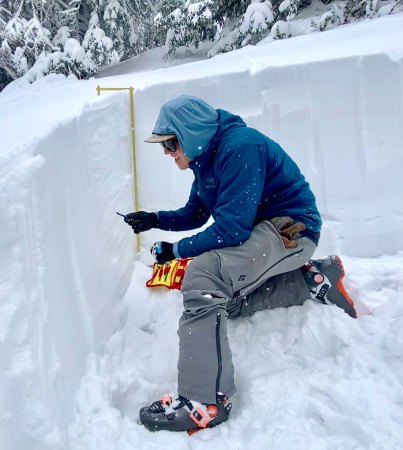
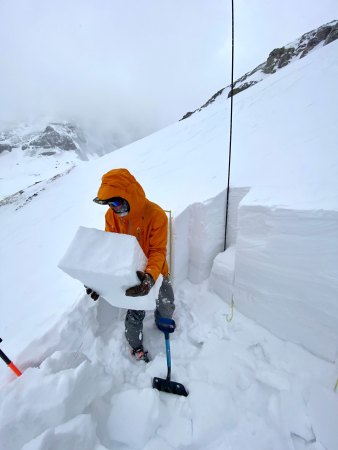
We then head out into the mountains and spend four to eight hours collecting data. A lot of that is making visual observations. I’m looking for any signs of recent avalanches and observing the terrain under my feet. I’m also targeting specific features such as slopes facing certain directions and altitudes. I might dig a snow pit to see the layering of the snowpack over time. We also have stability tests where we isolate blocks of snow and add stress by tapping on the snowpack.
We use those data to write a forecast. The public can see the forecast that evening and use it to plan their next day’s adventures in the backcountry.
What would you say was your most memorable experience in the field?
My most memorable experiences are often looking at avalanches that have already occurred. We investigate anytime there is an event involving people. Especially if someone is hurt, buried or even killed. Last winter, a friend of mine was caught in a very large avalanche outside a ski area. They were carried over cliffs and taken for a very scary and dangerous ride. Thankfully, they survived, but it really made me want to understand why that happened.
People often wonder what they did wrong if they got caught in an avalanche. Sometimes natural avalanches catch people. They might just be completely unaware that they’re in the hazard zone. But other times, people enter places where there’s more risk.
After analyzing the avalanche my friend was in, I was able to explain to them that they could’ve avoided triggering the avalanche by skiing about 30 feet [9 meters] to either side. It was an unlucky situation of being in the wrong place at the wrong time. Those days are really memorable because they provide closure for people. We always want to learn from these experiences.
What advice would you give your younger self?
I’d say do the work you want to be paid for eventually. I launched a podcast project, the San Juan Stormcast. I sensed others wanted this information in a different format than the traditional avenues. Avalanche information is pretty serious. It’s often presented in a very direct way. The podcast allowed me to have a little more fun and to develop my voice.
I decided I wanted to share this public safety information with as many people as I can. No one was paying me for it. But that work gave me the foundational skills and exposure that I think got me my current position. If you wish you had a resource that no one else has created, just go ahead and build it yourself.