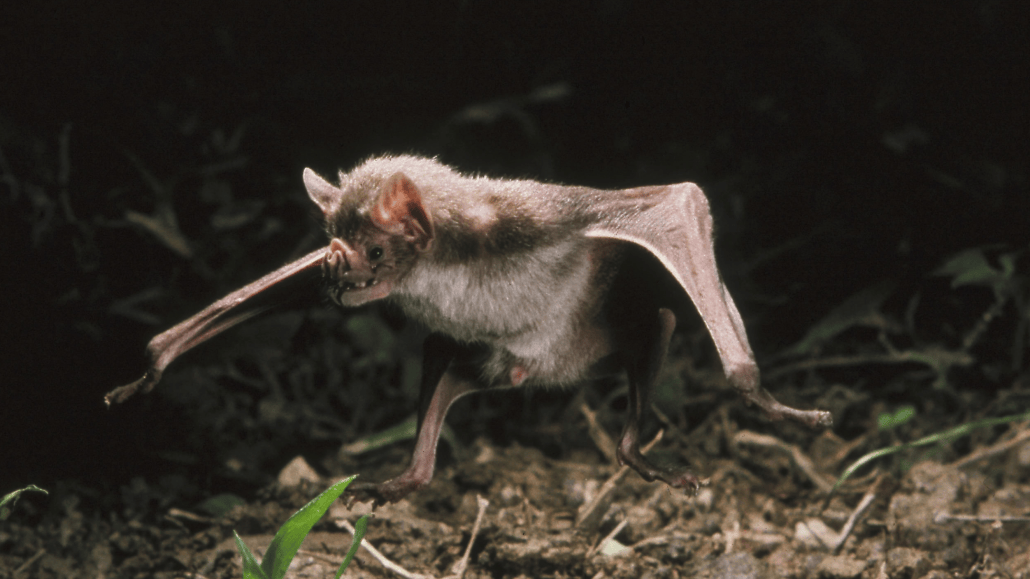
bat: A type of winged mammal comprising more than 1,400 separate species — or one in every four known species of mammal.
birds: Warm-blooded dinosaurs with wings that first showed up at least 150 million years ago. Birds are jacketed in feathers and produce young from the eggs they deposit in some sort of nest. Most birds fly, but throughout history there have been the occasional species that don’t.
calorie: The amount of energy needed to raise the temperature of 1 gram of water by 1 degree Celsius. It is typically used as a measurement of the energy contained in some defined amount of food. The exception: when referring to the energy in food, the convention is to call a kilocalorie, or 1,000 of these calories, a "calorie." Here, a food calorie is the amount of energy needed to raise 1 kilogram of water 1 degree C.
diet: (n.) The foods and liquids ingested by an animal to provide the nutrition it needs to grow and maintain health. Sometimes this is a specific food-intake plan.
digest: (noun: digestion) To break down food into simple compounds that the body can absorb and use for growth. Some sewage-treatment plants harness microbes to digest — or degrade — wastes so that the breakdown products can be recycled for use elsewhere in the environment.
fat: A natural oily or greasy substance occurring in plants and in animal bodies, especially when deposited as a layer under the skin or around certain organs. Fat’s primary role is as an energy reserve. Fat also is a vital nutrient, though it can be harmful if consumed in excessive amounts.
gut: An informal term for the gastrointestinal tract, basically the stomach and intestines. These organs digest — break down — foods and absorb their nutrients for use by the body.
iron: A metallic element that is common within minerals in Earth’s crust and in its hot core. This metal also is found in cosmic dust and in many meteorites.
kidney: Each in a pair of organs in mammals that filters blood and produces urine.
mammal: An animal distinguished by possessing hair or fur, the secretion of milk by females for the feeding of their young, and (typically) the bearing of live young. They also are warm-blooded (or endothermic).
mature: (adj.) Connoting an adult individual or full-grown and fully developed (non-juvenile) form of something. (verb) To develop toward — or into — a more complex and full-grown form of something, be it a living thing, a technology or an idea.
nectar: A sugary fluid secreted by plants, especially by flowers. It encourages pollination by insects and other animals. It is collected by bees to make into honey.
nutrient: A vitamin, mineral, fat, carbohydrate or protein that a plant, animal or other organism requires as part of its food in order to survive.
protein: A compound made from one or more long chains of amino acids. Proteins are an essential part of all living organisms. They form the basis of living cells, muscle and tissues; they also do the work inside of cells. Antibodies, hemoglobin and enzymes are all examples of proteins. Medicines frequently work by latching onto proteins.
savannah: An open, large landscape in tropical and subtropical environments that is dominated by grasses but contains some trees and/or shrubs.
species: A group of similar organisms capable of producing offspring that can survive and reproduce.
supplement: (verb) To add to something. (in nutrition) Something taken in pill or liquid form — often a vitamin or mineral — to improve the diet. For instance, it may provide more of some nutrient that is believed to benefit health. It may also provide some substance to the diet that is claimed to promote health.
system: A network of parts that together work to achieve some function. For instance, the blood, vessels and heart are primary components of the human body's circulatory system. Similarly, trains, platforms, tracks, roadway signals and overpasses are among the potential components of a nation's railway system. System can even be applied to the processes or ideas that are part of some method or ordered set of procedures for getting a task done.
tick: A small eight-legged blood-sucking arthropod, related to spiders and mites. Although they look like bugs, these are not insects. They attach themselves to the skin of their host and feed on their blood. But in the process, they may spread any germs that could have been present in the blood of an earlier host.
toxic: Poisonous or able to harm or kill cells, tissues or whole organisms. The measure of risk posed by such a poison is its toxicity.
vitamin: Any of a group of chemicals that are essential for normal growth and nutrition and are required in small quantities in the diet because either they cannot be made by the body or the body cannot easily make them in sufficient amounts to support health.