MS-ESS1-3
Analyze and interpret data to determine scale properties of objects in the solar system.
- Animals
Cool Jobs: A world aglow
Three scientists probe how the natural world makes light, in hopes of using this information to design new and better products.
- Physics
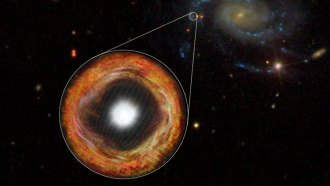
Star caught passing gas before exploding
Stars can become unstable as they near death, a new study suggests. Some may even spew gas for a year or so before they explode.
- Planets
Scientists Say: Goldilocks zone
Not too hot, not too cold. Just right. This is the region around a star where water could be a liquid, instead of a solid or gas.
- Physics
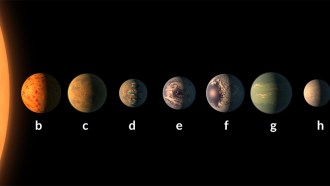
New solar system found to have 7 Earth-size planets
A neighboring star system hosts seven Earth-like planets. Especially surprising: Three of those planets appear to reside in a zone that could support life as we know it.
- Physics
Strange X-rays point to possible ‘dark’ matter
Scientists have been looking for “dark” matter. It’s supposed to make up most of the universe — but it’s also invisible. X-rays may now point to where some of this weird stuff is.
- Planets
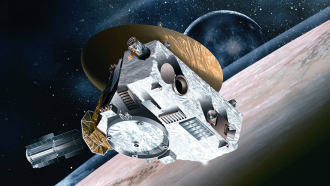
Cool Jobs: Probing Pluto
The New Horizons mission captivated the world as it flew by Pluto. Here are some of the people who made that possible.
- Space
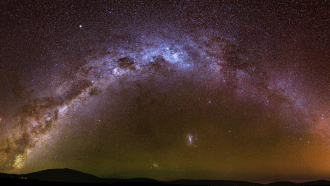
Rivers of stars flow between ‘clouds’ orbiting the Milky Way
Two streams of stars flow between dwarf galaxies known as the Magellanic Clouds. This new finding could give clues to the structure of our Milky Way galaxy.
- Space
Clouds on Jupiter run surprisingly deep
Jupiter’s clouds are not just a thin jacket about the planet, new data show.
- Space
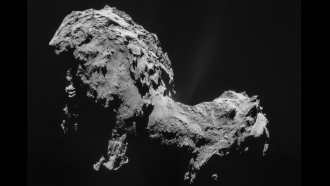
Scientists Say: Comet
Comets are small solar system objects. When they pass close to their sun, their melting gases and water give them a tail.
-
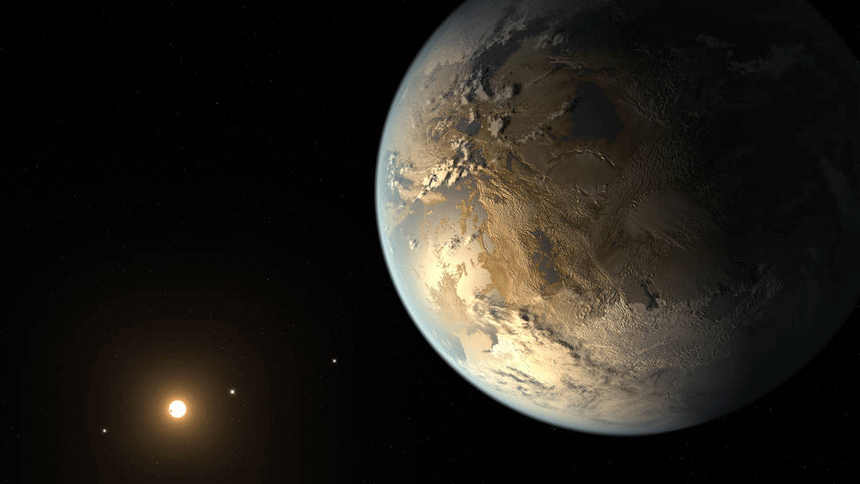
Scientists consider how to visit the closest exoplanet
Even at only a little more than four light-years away, a trip to our closest exo-world could take some tens of thousands of years — unless we’re willing to settle for virtual visits.
- Space
Women in STEM reach for the stars
What does science look like? These astronomers, astrophysicists and planet hunters are out of this world.
- Space
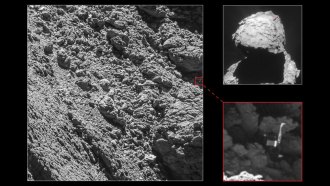
Lost lander spotted on comet’s surface
Scientists have spotted the missing comet lander. Philae landed in a shadow, which kept the sun from recharging its batteries.