MS-LS4-1
Analyze and interpret data for patterns in the fossil record that document the existence, diversity, extinction, and change of life forms throughout the history of life on Earth under the assumption that natural laws operate today as in the past.
- Fossils
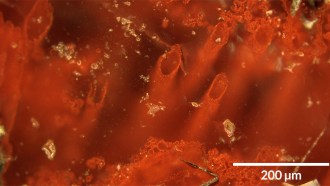
Fossils offer new candidate for earliest life
Rock unearthed in Canada appears to hold fossils from seafloor microbes that would have lived around 4 billion years ago, when Earth was very young.
- Science & Society
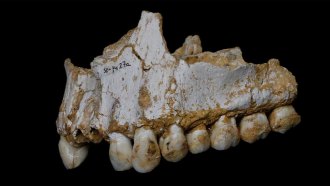
Fossils point to Neandertal diets — and medicine use
Whether Neandertals were largely meat-eaters or vegans depended on their environment, fossils now suggest. Their teeth also indicate they used natural medicines.
- Animals
Dinosaur tail preserved in amber — feathers and all
Scientists have found the tail of a dinosaur trapped in amber. It includes both feathers and identifiable bits of bone.
- Animals
Speckled dino spurs debate about ancient animals’ colors
Structures found in fossil dinosaur skin may give clues to the creatures’ colors and how they lived. But not all scientists agree on how to interpret what they see.
- Animals
Dino brain found ‘pickled’ in boggy swamp
Scientists claim to have identified the first fossil brain tissue from a dinosaur.
- Genetics
Human DNA carries hints of unknown extinct ancestor
A new study suggests people today carry genetic traces of now-extinct species unknown to science.
- Climate
Globe’s non-Africans all descend from a single move out of Africa
Look back far enough and everybody’s ancestors were African no more than 72,000 years ago. Climate scientists would up that date to perhaps 100,000 years ago.
- Animals
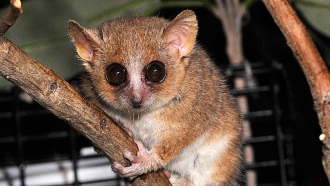
Surprising primate fossils found in an Indian coal mine
Bones of a 54.5-million-year-old primate suggest India might have been a hotbed of early primate evolution.
- Animals
Mini pterosaur from the age of flying giants
Not all pterosaurs flying the Cretaceous skies had a wingspan as wide as a school bus is long. Some, new fossils show, were smaller than modern eagles.
- Earth
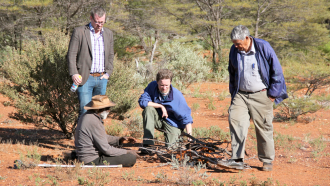
These may be the oldest fossils on Earth
Some mini mounds in Greenland may just be the earliest evidence of life on Earth, deposited a mere 800,000 years after our planet first formed.
- Agriculture
The first farmers were two groups, not one
The humans that began farming 10,000 years ago in the Fertile Crescent may have been two cultures living side-by-side.
- Animals
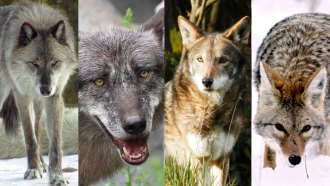
Wolf species shake-up
A genetic study says red wolves and eastern wolves may really be mixtures of coyotes and gray wolves, not distinct species.