MS-LS4-1
Analyze and interpret data for patterns in the fossil record that document the existence, diversity, extinction, and change of life forms throughout the history of life on Earth under the assumption that natural laws operate today as in the past.
- Fossils
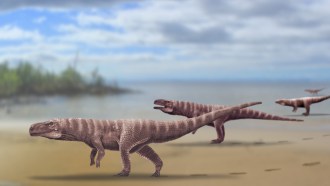
These crocodile ancestors lived a two-legged life
A set of 106-million year old footprints show a crocodile relative appears to have walked on two legs.
- Animals
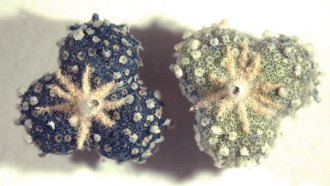
Tube-dwelling sea creatures may be oldest known parasites
A fossil bed of clam-like animals from a half-billion years ago is covered in tube-dwelling organisms. These suggest the tube dwellers were parasites, scientists now report.
- Archaeology
This cave hosted the oldest known human remains in Europe
Bone fragments, tools and other finds in Bulgaria suggest that Homo sapiens moved rapidly into Eurasia as early as 46,000 years ago.
- Fossils
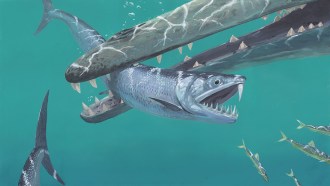
Saber-toothed anchovy relatives were once fearsome hunters
Today’s plankton-eating anchovies sport tiny teeth. But their ancient kin were armed with spiky lower teeth and a giant upper sabertooth.
- Humans
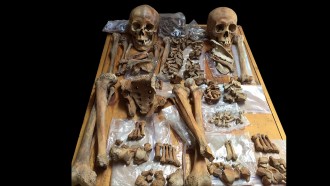
Skeletons hint that ancient societies had women warriors
Some women in North American hunter-gatherer societies and Mongolian herding groups may have been warriors.
- Chemistry
Ancient recipes helped scientists resurrect a long-lost blue hue
Led by medieval texts, scientists hunted down a plant and used its fruit to make a blue watercolor with mysterious origins.
- Fossils
This dinosaur was no bigger than a hummingbird
The skull of one of these ancient birds — the tiniest yet known — was discovered encased in a chunk of amber originally found in Myanmar.
- Animals
Small T. rex ‘cousins’ may actually have been growing teens
Dinosaurs once thought to be mini cousins of Tyrannosaurus rex may have been merely adolescent members of the famous species, a new study suggests.
- Earth
Explainer: Understanding geologic time
Geologic time is unimaginably long. Geologists puzzle it out using a calendar called the Geologic Time Scale.
- Animals
DNA tells tale of how cats conquered the world
Ancient DNA study suggests that domesticated cats spread across the ancient world in two waves.
- Archaeology
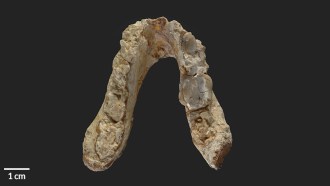
European fossils may belong to earliest known hominid
New fossils suggest that the earliest non-ape human ancestors may have evolved in Europe, not Africa.
- Fossils
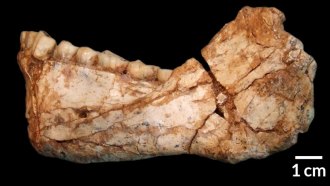
Study claims to have found oldest human fossils
Humans, as a species, may be much older than previously thought. They also may have evolved further North and West of the suspected cradle of human evolution.