MS-LS4-1
Analyze and interpret data for patterns in the fossil record that document the existence, diversity, extinction, and change of life forms throughout the history of life on Earth under the assumption that natural laws operate today as in the past.
- Animals
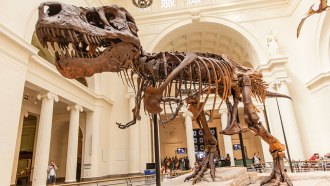
Scientists Say: Dinosaur
Dinosaurs emerged between 243 and 233 million years ago. While some died out 66 million years ago, others are still with us — birds.
- Fossils
An ancient hippo-sized reptile may have been a speedy beast
An Anteosaurus was a hefty reptile with a large snout. Its fossil skull hints that it may have moved fast for its time.
- Animals
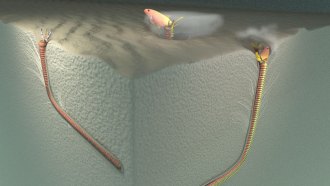
Giant worms may have hidden beneath the ancient seafloor to ambush prey
Twenty-million-year-old tunnels unearthed in Taiwan may have been home to creatures similar to today’s monstrous bobbit worms.
- Archaeology
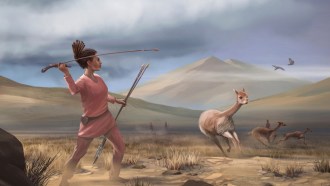
This prehistoric woman from Peru hunted big game
Women in the Americas speared large prey as early as 9,000 years ago, new archaeological evidence suggests.
- Animals
Scientists Say: Evolution
Evolution is how species change over time. Individuals in the group vary, and some will pass on their genes. Over time, the whole species changes.
- Animals
Attack of the inner-cannibal mega-shark
The outsized megalodon was a fierce terror that chewed its way across the oceans. It learned to kill even before it was born.
- Genetics
Some Neandertal genes may up the risk of severe COVID-19
Most of the affected people descend from communities in South Asia or live in Europe today.
- Animals
Let’s learn about bones
Bones hold us up and help us fight gravity with every step. They also make blood cells, hormones and more.
- Animals
See what these animal mummies are keeping under wraps
A new method of 3-D scanning mummified animals reveals life and death details of a snake, a bird and a cat that lived in ancient Egypt.
- Animals
American crocs seem to descend from kin that crossed the Atlantic
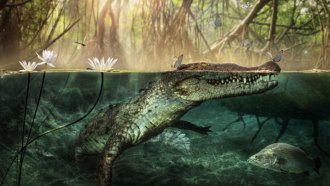
A fossil hints that early crocodiles crossed over from Africa, millions of years ago, to colonize a new land.
- Archaeology
Let’s learn about early humans
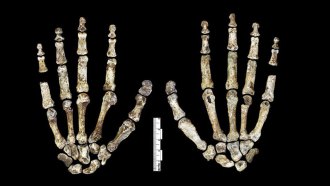
Homo sapiens are the last member left of our genus. But many other species of early humans existed before us.
- Chemistry
Early dinosaurs may have laid soft-shelled eggs
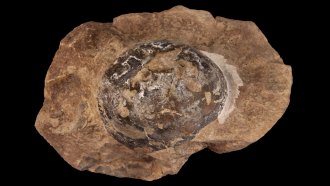
Scientists for the first time have turned up evidence of fossils from soft-shelled dinosaur eggs. This has scientists rethinking how dinosaur eggs evolved.