MS-LS4-2
Apply scientific ideas to construct an explanation for the anatomical similarities and differences among modern organisms and between modern and fossil organisms to infer evolutionary relationships.
- Animals
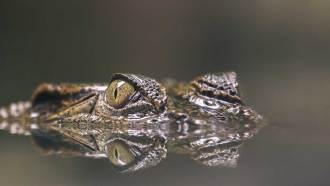
Let’s learn about alligators and crocodiles
Alligators and crocodiles seem similar — but they live in different places and look different, too.
- Chemistry
Stinky success: Scientists identify the chemistry of B.O.
They turned up the enzyme in bacteria behind that underarm stench. Understanding how it works could pave the way to new types of deodorant.
- Microbes
Some deep-seafloor microbes still alive after 100 million years!
Some starving microbes nap while awaiting their next meal. For some living miles below the ocean surface, that nap may exceed 100 million years.
- Animals
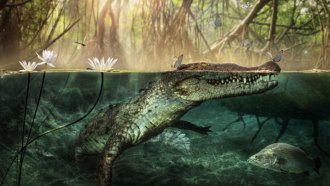
American crocs seem to descend from kin that crossed the Atlantic
A fossil hints that early crocodiles crossed over from Africa, millions of years ago, to colonize a new land.
- Archaeology
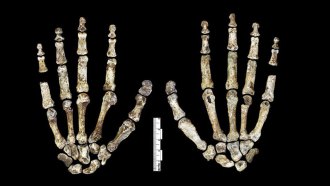
Let’s learn about early humans
Homo sapiens are the last member left of our genus. But many other species of early humans existed before us.
- Chemistry
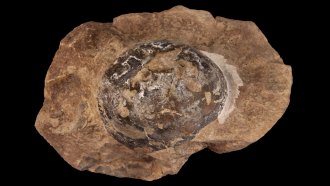
Early dinosaurs may have laid soft-shelled eggs
Scientists for the first time have turned up evidence of fossils from soft-shelled dinosaur eggs. This has scientists rethinking how dinosaur eggs evolved.
- Fossils
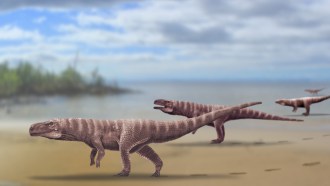
These crocodile ancestors lived a two-legged life
A set of 106-million year old footprints show a crocodile relative appears to have walked on two legs.
- Animals
Tube-dwelling sea creatures may be oldest known parasites
A fossil bed of clam-like animals from a half-billion years ago is covered in tube-dwelling organisms. These suggest the tube dwellers were parasites, scientists now report.
- Archaeology
This cave hosted the oldest known human remains in Europe
Bone fragments, tools and other finds in Bulgaria suggest that Homo sapiens moved rapidly into Eurasia as early as 46,000 years ago.
- Fossils
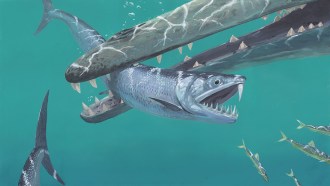
Saber-toothed anchovy relatives were once fearsome hunters
Today’s plankton-eating anchovies sport tiny teeth. But their ancient kin were armed with spiky lower teeth and a giant upper sabertooth.
- Chemistry
Ancient recipes helped scientists resurrect a long-lost blue hue
Led by medieval texts, scientists hunted down a plant and used its fruit to make a blue watercolor with mysterious origins.
- Animals
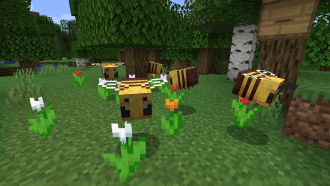
Minecraft’s big bees don’t exist, but giant insects once did
Big bees buzz in Minecraft. In our world, blocky bees might starve and be stuck on the ground. Yet long ago, giant insects did roam our planet.