MS-LS4-2
Apply scientific ideas to construct an explanation for the anatomical similarities and differences among modern organisms and between modern and fossil organisms to infer evolutionary relationships.
- Animals
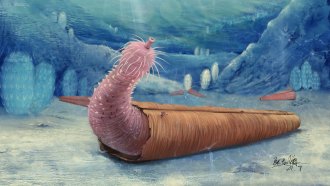
‘Penis worms’ could have been the original hermits
These soft-bodied critters lived in abandoned shells about 500 million years ago, a new study suggests.
- Animals
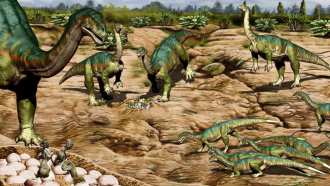
Fossils point to earliest dinosaurs that lived in herds
A fossilized family gathering of long-necked Mussaurus from 193 million years ago is the earliest evidence yet of herd behavior in dinos.
- Archaeology
Genetics show humans likely trace back to Africa
Our history began looking ever more complex once geneticists revealed our ancestors picked up new DNA as they traveled across time and continents.
- Agriculture
The ultimate genealogical search hunts for our earliest ancestors
The complex search to identify humans’ most distant cousins is long, complex and far from straightforward. It’s also far from over.
- Animals
What biologists call a species is becoming more than just a name
The tree of life — evolution — has been reshaping how scientists name and classify organisms. Some want naming to reflect evolutionary groups even more.
- Animals
Will the woolly mammoth return?
Scientists are using genetic engineering and cloning to try to bring back extinct species or save endangered ones. Here’s how and why.
- Animals
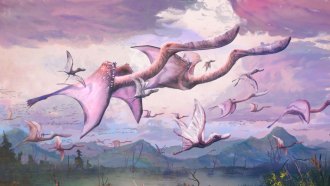
Baby pterosaurs may have been able to fly right after hatching
A bone crucial for lift-off was stronger in hatchling pterosaurs than in adults. The baby reptiles also had shorter, broader wings than grown-ups.
- Fossils
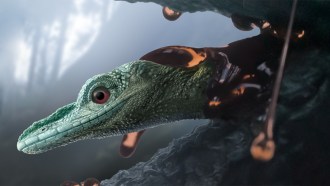
Ancient creature revealed as lizard, not a teeny dinosaur
CT scans of 99-million-year-old fossils of hummingbird-sized specimens trapped in amber reveal a number of lizardlike features.
- Archaeology
Fossils unearthed in Israel reveal possible new human ancestor
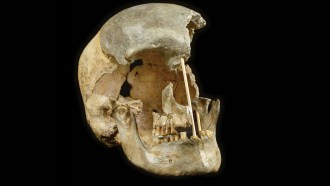
They come from a previously unknown Stone Age group that may represent a complex mashup of early members of our genus Homo.
- Animals
Let’s learn about whales and dolphins
Whales, dolphins and porpoises are all cetaceans — mammals that live in water and have a streamlined body similar to a fish.
- Fossils
How scientists can get a better picture of our extinct relatives
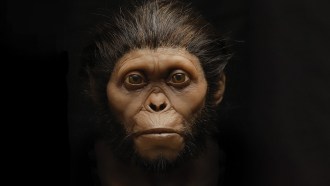
Facial reconstructions of extinct species have historically been more art than science. Some researchers hope to change that.
- Archaeology
Europe’s ancient humans often hooked up with Neandertals
DNA from ancient bones shows humans and Neandertals were regularly mixing genes by about 45,000 years ago.