Animals
- Animals
Beware the tap of the narwhal’s tusk
A new video shows narwhals using their tusks to tap fish before eating them. They might be stunning their prey — or just playing with their food.
- Animals
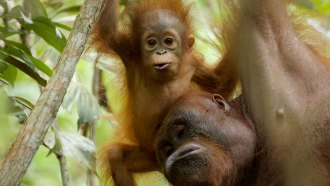
Orangs nurse young for more than eight years!
Orangutan moms and babies have been tricky to study in the wild, so researchers used dental tests to reveal a record setting nursing period.
- Animals
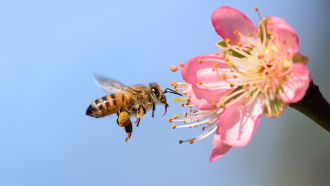
Popular pesticide may harm bee flight
In a lab experiment, honeybees flew sluggishly after eating pesticide-tainted food.
- Animals
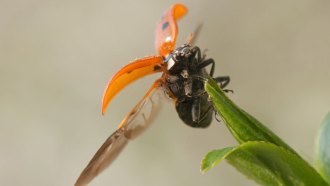
Analyze This: A massive annual insect migration
A study of seasonal insect migration gave some surprising results.
- Animals
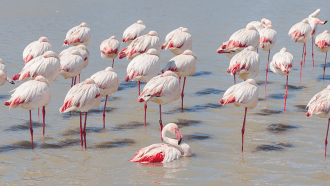
How a flamingo balances on one leg
Flamingos are so good at balancing on just one leg that they can snooze that way with little effort.
- Animals
Scientists Say: Extremophile
Some species can survive high heat, freezing cold or other extreme environments. Scientists call these organisms extremophiles.
- Animals
Underwater robot vacuums up lionfish
Lionfish damage coral reefs in the Atlantic Ocean. A new underwater robot hunts, stuns and captures the bullies with help from a human operator.
- Animals
How the house mouse found its home
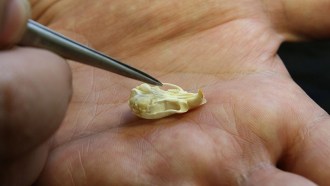
Once people started settling down 15,000 years ago, a mouse species followed them indoors. The animals didn’t need people to be farming and storing food.
- Animals
Nighttime lights can dim a firefly’s flash
Fireflies blink to attract mates. But when it’s too bright at night, the insects may stay away.
- Animals
Toss and slap — how dolphins disarm a dangerous meal
Octopus can be a deadly meal, especially if you don’t have hands to cut it up. But dolphins in Australia have figured out how to eat octopus without choking to death.
- Animals
These killer whales exhale sickening germs
A group of endangered killer whales are exhaling disease-causing germs. Researchers worry these microbes could make the animals sick.
- Animals
Flu fighter found in frog slime
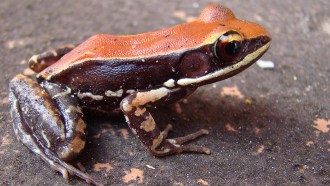
A protein found in the mucus secretions of an Indian frog can take down a type of flu virus, a new study finds.