Archaeology
- Archaeology
Carvings on Australia’s boab trees reveal a people’s lost history
Archaeologists and an Aboriginal family are working together to find and document a First Nations group’s lost ties to the land.
- Archaeology
American democracy arrived long before Columbus did
Indigenous peoples of the Americas developed self-rule long before the pilgrims arrived or the U.S. Constitution was written.
- Humans
Let’s learn about Neandertals
Neandertals are an extinct species closely related to modern humans. They made tools and jewelry, controlled fires and cared for their sick.
- Archaeology
Neandertals were a lot like our human ancestors
From toolmaking to healthcare, new research finds that Neandertals shared many cultural and social similarities with our human ancestors.
- Humans
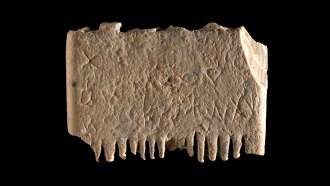
This ancient ivory comb reveals a wish to be free of lice
The comb bears the earliest known complete sentence written in a phonetic alphabet, researchers say.
- Archaeology
King Tut’s tomb still holds secrets 100 years after its discovery
New details of Tut’s story are still coming to light. Here are three things to know on the 100th anniversary of his tomb’s discovery.
- Humans
Long-lost ‘smellscapes’ are wafting from artifacts and old texts
By studying and reviving old scents, archaeologists are finding new clues about how ancient Egyptians experienced their world through smell.
- Animals
Rats can chronicle human history
Rats have lived alongside people for thousands of years. Now, scientists can study the rats and their leavings to learn more about ourselves.
- Archaeology
Bright-colored feathers may have topped pterosaurs’ heads
Fossil remains of a flying reptile hint that their vibrant crests may have originated 250 million years ago in a common ancestor with dinosaurs.
- Archaeology
Scientists Say: Denisovan
The Denisovans were a recently discovered population of ancient hominids.
- Archaeology
Muons reveal the inner worlds of pyramids, volcanoes and more
Tracking these subatomic particles can uncover surprising hidden structures.
- Archaeology
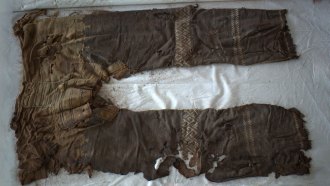
The earliest known pants are surprisingly modern — and comfy
This 3,000-year-old garment was not only stylish but also functional. By recreating it, scientists also unraveled its complex and multicultural origins.