Archaeology
- Archaeology
What the mummy’s curse reveals about your brain
A man died soon after opening a mummy’s tomb. But don’t assume the mummy killed him. Statistics help explain why coincidences may not be meaningful.
- Archaeology
This prehistoric woman from Peru hunted big game
Women in the Americas speared large prey as early as 9,000 years ago, new archaeological evidence suggests.
- Animals
See what these animal mummies are keeping under wraps
A new method of 3-D scanning mummified animals reveals life and death details of a snake, a bird and a cat that lived in ancient Egypt.
- Archaeology
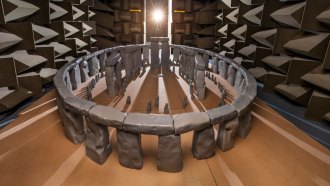
Stonehenge enhanced voices and music within the stone ring
Scientists built a 'Stonehenge Lego' model in a sound chamber to study how sound would have behaved in the ancient stone circle.
- Archaeology
Let’s learn about ancient technology
Ancient people didn’t have the internet. Instead, they performed surgeries, made weapons and built monuments with wood, stones, rope and fire.
- Archaeology
Women like Mulan didn’t need to go to war in disguise
Female skeletons in Mongolia show injuries like those of fighting men — evidence that they could be warriors, too.
- Archaeology
Let’s learn about early humans
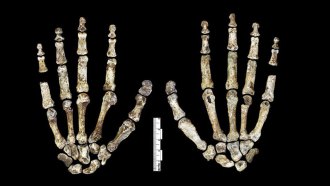
Homo sapiens are the last member left of our genus. But many other species of early humans existed before us.
- Archaeology
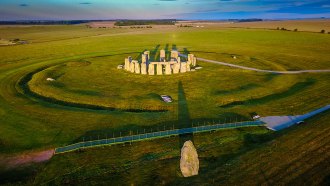
Underground mega-monument found near Stonehenge
Archaeologists used high-tech tools to uncover ancient underground pits near Stonehenge. The find may offer insights into Britain’s Stone Age culture.
- Archaeology
Scientists Say: Archaeology
People leave things where they’ve been — old buildings, trash heaps and human skeletons. Archaeology is the study of those left-behind things.
- Archaeology
Let’s learn about mummies
A mummy is a preserved body. They’re fun and spooky, but also a great chance to learn about people of the past.
- Archaeology
This cave hosted the oldest known human remains in Europe
Bone fragments, tools and other finds in Bulgaria suggest that Homo sapiens moved rapidly into Eurasia as early as 46,000 years ago.
- Archaeology
3-D printing helps resurrect an ancient Egyptian mummy’s voice
A 3-D printed mold of a mummy’s vocal tract reveals what the mummy may sound like today.