Earth
- Animals
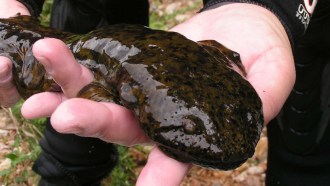
Hellbenders need help!
Hellbenders already face threats such as habitat loss, pollution and disease. But climate change could make matters worse. And the problems facing hellbenders could spell trouble for more than just these giant amphibians.
- Climate
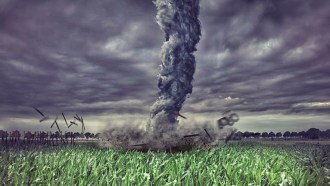
Distant pollution may intensify U.S. twisters
A new study of one of the deadliest U.S. outbreaks of tornadoes sees a possible role for smoke. In this analysis, the smoke had come from fires burning in Central America.
- Climate
Desert plants: The ultimate survivors
Creosote, mesquite and other desert plants rely on different adaptations to thrive, even when no rain falls for an entire year.
- Climate
Fast sea level rise is a very recent change
Sea levels have been rising for more than a century. But that rise is now speeding up. That suggests that what is driving the rise — climate change — also has increased dramatically in recent years.
- Earth
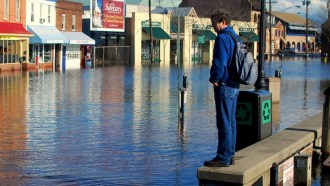
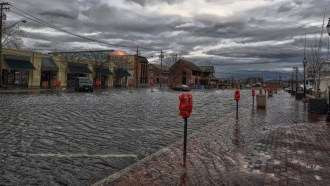
Tides may regularly swamp many U.S. cities
As sea levels rise, many cities will begin to experience frequent and extensive flooding at high tides. In some areas — even Washington, D.C. — such flooding could become a weekly headache.
- Chemistry
Air pollution can mess with our DNA
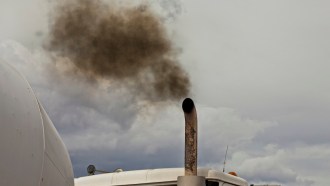
New research suggests a type of air pollution — diesel fumes — can affect your health. It inappropriately switches some genes on, while turning off others.
- Agriculture
Livestock: A need to save rare breeds
New studies and ongoing work highlight why society should save rare livestock breeds — and the part that technology can play.
- Agriculture
Explainer: What is a gene bank?
Most banks store money. But some very special ones store deposits that may prove even more valuable: tissues that could prevent the extinction of breeds and species.
- Environment
Nature documentary puts people in the picture
Many nature documentaries cut people out of the frame. A new series aims to show how we are entwined with our environments.
- Earth
Plastics at sea create raft of problems
About 5.25 trillion pieces of plastic float in the world's oceans, a new study finds. That's a problem. This 269,000 tons of plastic can choke, entangle and poison a wide variety of sea creatures.
- Earth
Dino double whammy
Most scientists think an asteroid helped kill off the dinosaurs. But new calculations suggest that asteroid might have gotten some help from a long series of volcanic eruptions in what is now India.
- Climate
Thunderstorms can generate powerful radiation
Thunderstorms don’t just hurl lightning bolts. Some churn out high-energy radiation that can be seen by spacecraft. This radiation offers scientists a glimpse of the inner workings of thunderclouds.