Earth
- Chemistry
Cooking up life for the first time
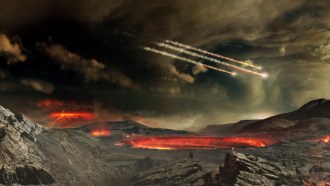
The basic components for life could have emerged together nearly 4 billion years ago on the surface of Earth, chemists report.
- Microbes
Life’s ultra-slow lane is deep beneath the sea
Biologists had suspected the deep seafloor would be little more than barren sediment. But they found a surprising amount of oxygen — and life.
- Earth
Explainer: Understanding plate tectonics
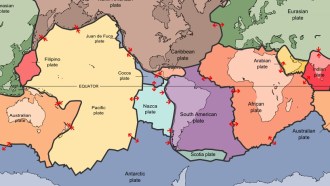
Plate tectonics is the process whereby Earth continually rebuilds itself — and causes destructive events like earthquakes and volcanic eruptions.
- Climate
Arctic warming bolsters summer heat
Rapid warming in the Arctic is sapping summer storms of their power to cool. That worsens heat waves across the Northern Hemisphere.
- Animals
Finding out why birds are out of range
Sometimes people see large numbers of birds outside of their normal range. A student examined how to predict these excursions.
- Earth
Corals dine on microplastics
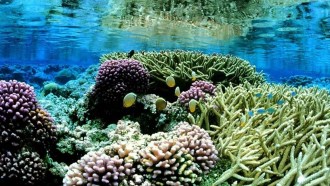
Plastic in the ocean is a growing problem. New research finds that corals may eat tiny bits of plastic, prompting new concerns about the health of living reefs.
- Earth
Ancient ocean linked to supercontinent’s breakup
The supercontinent Pangaea started breaking apart 200 million years ago. This may have been triggered by the shrinking of the Tethys Ocean, a new study finds.
- Earth
News Brief: Volcanic spark zaps ash to glass
The lightning associated with some erupting volcanoes can be quite crafty — turning ash into lots of microscopic glass beads.
- Climate
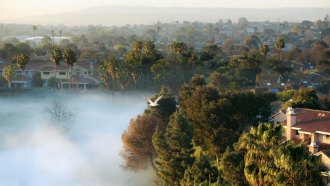
Buildings may be chasing L.A.’s fog away
Roads and buildings that have mushroomed up around Los Angeles in the past half-century. Now, a study finds they may have created conditions that limit fog. And that could further dry out this very arid part of America’s West Coast.
- Climate
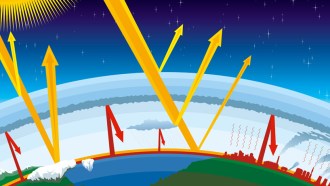
Scientists confirm ‘greenhouse’ effect of human’s CO2
Government scientists link directly, for the first time, a boost in warming at Earth’s surface to increasing levels of carbon dioxide. Much of that gas has been released by human activities, such as coal burning and gas-burning vehicles.
- Animals
Cats and foxes are eating up Australia’s mammals
Since the arrival of Europeans in Australia, a startling number of mammal species have disappeared. A new study puts much of the blame on cats and foxes introduced by the early settlers.
- Animals
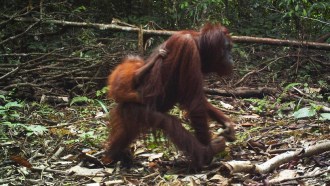
Orangutans take the low road
Cameras spotted orangutans walking down logging roads to get around. That may be a good sign that they can adapt to changes in their woodsy environment.