Environment
- Chemistry
Some 3-D printing can leave toxic taint
The ”ink” inside some 3-D printers can leave toxic traces. In tests, these chemicals harmed baby fish. But lighting could render the parts safer.
- Animals
Taking attendance with eDNA
Environmental DNA, or eDNA, tells biologists what species are in an area — even when they’re out of sight.
- Animals
Wildlife forensics turns to eDNA
Environmental DNA, or eDNA, tells biologists what species have been around — even when they’re out of sight or have temporarily moved on.
- Animals
Kangaroo farts: Not so ‘green’ after all?
Scientists had thought that kangaroo farts were environmentally friendly because they had little methane. That may not always be true.
- Chemistry
Mealworms chow down on plastic
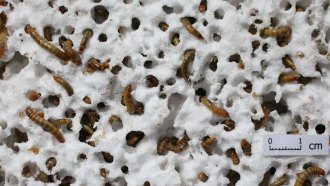
Gut bacteria in mealworms break down polystyrene. Feeding plastic to the worms, or the germs they carry, could be a way to get rid of these wastes.
- Brain
Stuffy classrooms may lower test scores
New research links fresh air in classrooms to test scores. Elementary-school students in stuffy classrooms, it found, may perform worse on standardized tests.
- Agriculture
‘Wildlife-free’ farms don’t make salads safer
Scientists find that removing wildlife from farms did not make raw vegetables safer to eat.
- Agriculture
Insecticide can change a spider’s personality
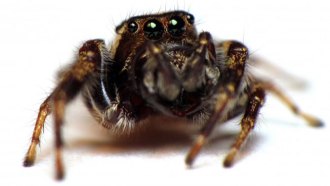
A chemical meant to kill moths affects the behavior of some spiders. It alters the spiders’ ability to capture prey — including those moths.
- Agriculture
Organic food starts to prove its worth
Organic food often comes with a higher price. But research is showing that food grown this way can be better for the environment — and possibly for us.
- Brain
To protect kids, get the lead out!
Lead poisons hundreds of thousands of children. In Chicago, experts show how the toxic metal hurts test performance in school.
- Climate
The heat that keeps on giving
Burning fossil fuels generates heat and carbon dioxide. That pulse of heat is quickly exceeded by the warmth that carbon dioxide traps in Earth’s atmosphere.
- Earth
Too hot? Some peaks offer climate migrants lots of land
As mountain climates warm, species may actually gain ground as they migrate up to cooler sites, a new study finds.