Fossils
- Animals
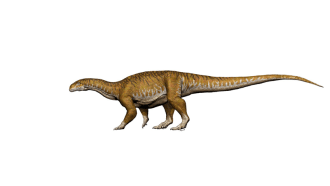
There’s more than one way to build a giant dinosaur
Some early long-necked dinosaurs may have built big bodies from a different blueprint than their later giant relatives.
- Animals
This extinct bird boasted dinosaur-like teeth
Fossil skulls from an ancient bird shows this flyer had a beak — but dino-like chompers to chew through its prey.
- Animals
Hefty dinosaurs had a trick for sitting on eggs safely
To keep their eggs warm without squashing them, some heavy dinosaurs laid eggs in a ring and sat in a space at the middle.
- Fossils
Ancient jaw suggests humans left Africa earlier than thought
A fossil jaw found in a cave in Israel is at least 177,000 years old. The scientists who found it think it shows humans left Africa much earlier than thought.
- Life
Defining a dinosaur is now far harder
New fossil finds are making it difficult to say for certain what makes dinosaurs unique.
- Animals
Jackpot! Hundreds of fossilized pterosaur eggs unearthed in China
A trove of fossilized pterosaur eggs and embryos offer tantalizing clues to the winged reptiles’ early development.
-
- Animals
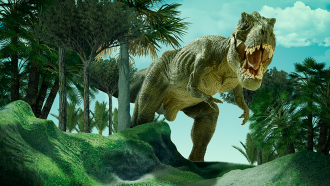
Tiny T. rex arms were built for combat
The fearsome T. rex had more than a mouth full of killer teeth. Its relatively tiny arms also could have served in close combat as powerful slashers.
- Animals
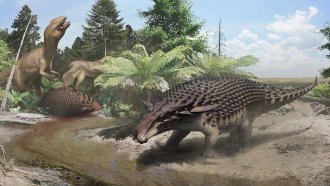
Camo might have helped this armored dinosaur avoid becoming lunch
An armored dinosaur the size of a Japanese sedan also wore camouflage, a new analysis of its skin suggests.
- Fossils
T. rex may not have been able to run — but it was still pretty fast
T. rex was fearsome, but its leg bones may not have been strong enough to stand the stresses of running.
- Animals
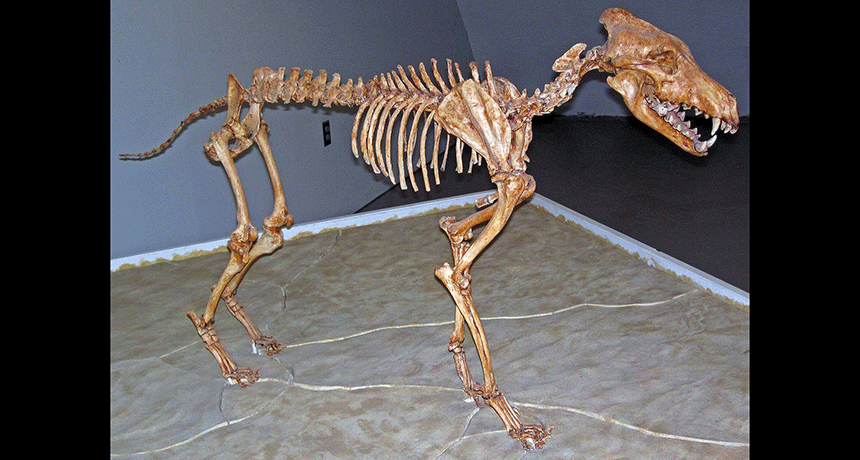
Scientists Say: Dire wolf
Dire wolves are an extinct species of wolf that roamed North America from about 300,000 to 12,000 years ago.
- Archaeology
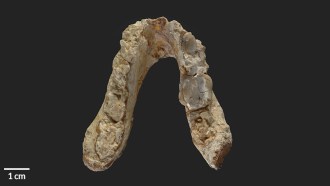
European fossils may belong to earliest known hominid
New fossils suggest that the earliest non-ape human ancestors may have evolved in Europe, not Africa.