Fossils
- Fossils
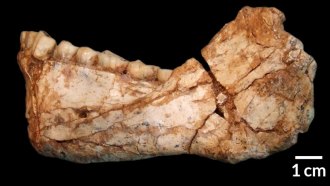
Study claims to have found oldest human fossils
Humans, as a species, may be much older than previously thought. They also may have evolved further North and West of the suspected cradle of human evolution.
- Animals
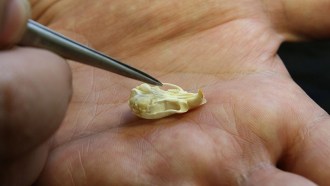
How the house mouse found its home
Once people started settling down 15,000 years ago, a mouse species followed them indoors. The animals didn’t need people to be farming and storing food.
- Archaeology
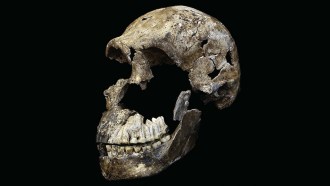
This hominid may have shared Earth with humans
Newfound fossils in South Africa point to a far more recent age for Homo naledi than had been accepted. If correct, this hominid might have coexisted with humans — even interacted with our species.
- Animals
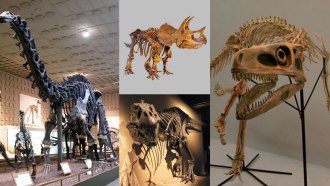
Scientists are rethinking the dinosaur family tree
The dinosaur family tree consists of three main branches. Or maybe not. A new study suggests a rewrite is due.
- Fossils
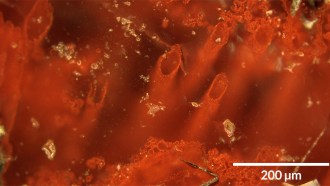
Fossils offer new candidate for earliest life
Rock unearthed in Canada appears to hold fossils from seafloor microbes that would have lived around 4 billion years ago, when Earth was very young.
- Science & Society
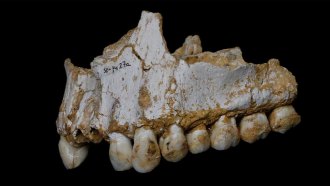
Fossils point to Neandertal diets — and medicine use
Whether Neandertals were largely meat-eaters or vegans depended on their environment, fossils now suggest. Their teeth also indicate they used natural medicines.
- Animals
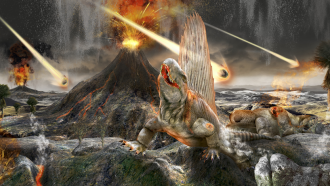
What killed the dinosaurs?
New evidence is emerging that a devastating combo of events — an asteroid impact and supervolcanoes — may be behind the dinosaurs’ demise.
- Animals
Dinosaur tail preserved in amber — feathers and all
Scientists have found the tail of a dinosaur trapped in amber. It includes both feathers and identifiable bits of bone.
- Animals
Speckled dino spurs debate about ancient animals’ colors
Structures found in fossil dinosaur skin may give clues to the creatures’ colors and how they lived. But not all scientists agree on how to interpret what they see.
- Animals
Dino brain found ‘pickled’ in boggy swamp
Scientists claim to have identified the first fossil brain tissue from a dinosaur.
- Animals
Mini pterosaur from the age of flying giants
Not all pterosaurs flying the Cretaceous skies had a wingspan as wide as a school bus is long. Some, new fossils show, were smaller than modern eagles.
- Earth
These may be the oldest fossils on Earth
Some mini mounds in Greenland may just be the earliest evidence of life on Earth, deposited a mere 800,000 years after our planet first formed.