Humans
- Environment
Warning: Wildfires might make you itch
Western wildfires are on the rise due to climate change and land use. Now a study adds eczema to the list of health risks that smoke might trigger.
- Fossils
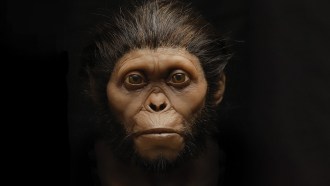
How scientists can get a better picture of our extinct relatives
Facial reconstructions of extinct species have historically been more art than science. Some researchers hope to change that.
- Brain
Let’s learn about touch
Most senses are concentrated around your head. But touch all over your body, and you need every inch.
- Computing
Will this smartphone app become your exercise coach?
When one teen couldn’t go to the gym, she invented an app to bring her gymnastics coach to her home. She succeeded and won a major award for it.
- Health & Medicine
New robots can clean virus-laden surfaces so people won’t have to
Smart and nimble cleaning robots will soon help disinfect spaces. They twist and bend to hit hard-to-reach spaces with UV light or cleansing sprays.
- Archaeology
Europe’s ancient humans often hooked up with Neandertals
DNA from ancient bones shows humans and Neandertals were regularly mixing genes by about 45,000 years ago.
- Psychology
Most people will add something — even when subtracting makes more sense
People default to adding when solving puzzles and problems, even when subtracting works better. That could underlie some modern-day excesses.
- Health & Medicine
Simpler, easier COVID-19 test developed with kids in mind
Designed by moms, it avoids any need to stick an uncomfortable swab up the nose. Instead, people just swish a dental roll around their mouths.
- Chemistry
Cool Jobs: Saliva offers a spitting image of our health
Scientists are using this secretion to study our body’s functions, to test for disease and even to diagnose injury.
- Brain
Search for ‘rewards’ is big driver in remodeling a teen’s brain
Communication ‘highways’ in the brain undergo a major overhaul as children morph into adults. Dopamine plays a big role in this remodeling project.
- Brain
Let’s learn about exercise
Our bodies — from our muscles to our brains — love a good workout. Scientists are always learning new things about exercise.
- Health & Medicine
Too much sitting could hurt your mental health
As inactivity increases, so does risk of depression and other mental health problems, new studies show. But breaks for even light activity can help.